
Why Chicago Medical Cleaning Services Demand High Standards
How to Evaluate Chicago Medical Cleaning Services
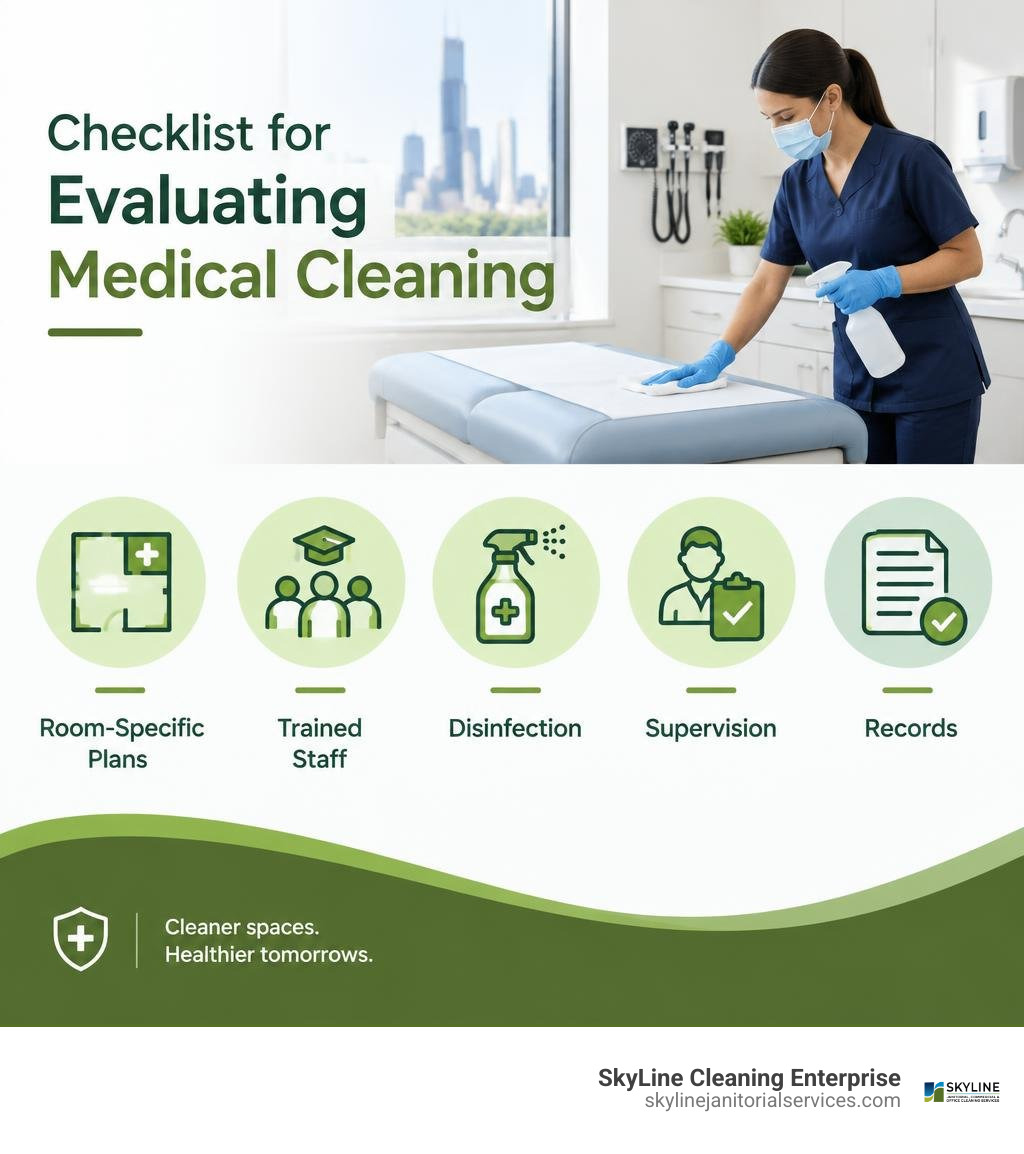
To evaluate Chicago medical cleaning services, start with the cleaning plan. It should name the surfaces cleaned, set a schedule for high-touch areas, and explain how staff prevent cross-contamination. Ask how the provider trains and supervises its team, uses disinfectants according to label directions, and documents completed work. For medical facilities in Cook County and Lake County, a plan tailored to each room is more useful than a general janitorial checklist.
These details matter because patients, staff, and visitors share spaces where missed surfaces can raise infection risks. This guide will help you review a provider’s standards and spot gaps before they become routine.
I’m Anna Szczurek, founder of SkyLine Cleaning Enterprise in Arlington Heights, where we’ve served commercial facilities, including medical facilities, since 2007. I’ll walk you through the questions that matter most when assessing Chicago medical cleaning services.
Regulatory Compliance and Infection Control for Chicago Medical Cleaning Services
Clinical sanitation is fundamentally different from standard commercial janitorial care. In healthcare settings, cleaning is a frontline defense against pathogens. Approximately 1 in 31 hospital patients in the United States contracts at least one healthcare-associated infection (HAI) on any given day. Furthermore, evidence shows that over 70% of HAIs can be prevented through rigorous cleaning and surface disinfection protocols.

When vetting Chicago medical cleaning services, facility managers must evaluate how thoroughly a contractor aligns with federal, state, and local mandates. A compliant provider adheres to guidelines from the Centers for Disease Control and Prevention (CDC), standards from the Occupational Safety and Health Administration (OSHA), and rules from the Illinois Department of Public Health (IDPH). Reviewing healthcare compliance standards helps administrative leaders understand what baseline protocols must exist before service begins.
A major element of clinical cleaning is the correct use of EPA-registered, hospital-grade disinfectants. Proper application requires respecting contact dwell times—the specific duration a disinfectant must remain visibly wet on a surface to neutralize target organisms. Wiping a chemical away too quickly leaves active bacteria and viruses behind.
For comprehensive federal benchmarks, healthcare leaders can review the official Environmental Infection Control Guidelines published by the CDC. In critical clinical areas, terminal cleaning protocols require systematic disinfection from clean zones to dirty zones, ensuring ceilings, walls, lights, patient beds, and floors are sanitized without recontaminating treated surfaces.
Bloodborne Pathogens and Biohazard Protocols in Chicago Medical Cleaning Services
Medical facilities routinely handle biological materials that present transmission hazards. Cleaning crews must operate under OSHA Bloodborne Pathogen Standards (29 CFR 1910.1030), treating all blood and bodily fluids as infectious.
Preventing cross-contamination requires structured controls:
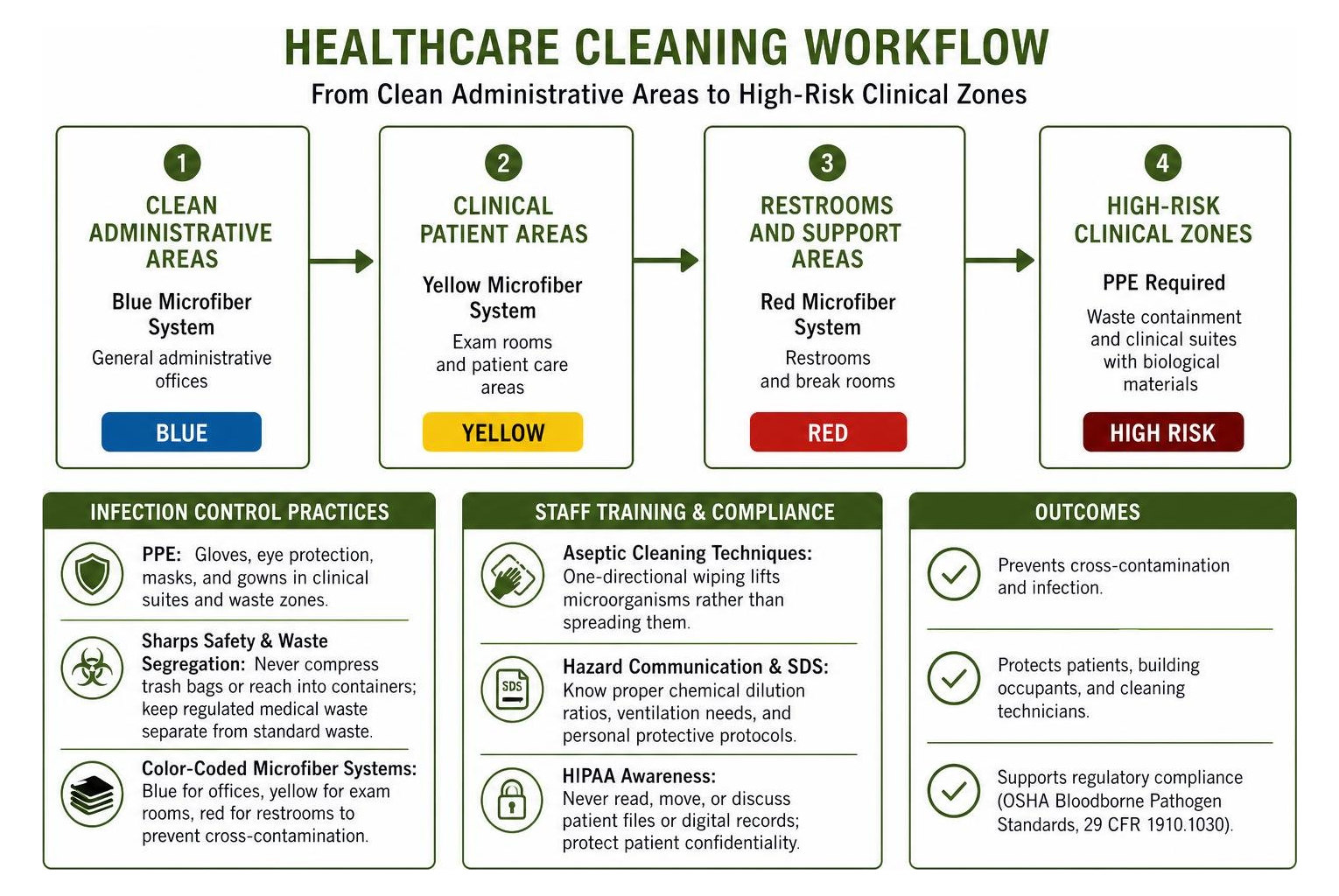
- Personal Protective Equipment (PPE): Staff must wear appropriate gloves, eye protection, masks, and protective gowns when servicing clinical suites and waste containment zones.
- Sharps Safety and Waste Segregation: Cleaning crews never compress trash bags or reach into containers where discarded sharps could puncture protective barriers. Regulated medical waste must remain segregated from standard commercial waste streams.
- Color-Coded Microfiber Systems: Top-tier cleaning operations dedicate specific microfiber cloths and mop pads to distinct zones (e.g., red for restrooms, yellow for exam rooms, blue for general administrative offices) so contaminants are never transferred between rooms.
Adhering to strict infection control cleaning safeguards both building occupants and cleaning technicians.
Staff Training and Regulatory Compliance Standards
Cleaning technicians assigned to medical environments require specialized orientation before stepping foot inside a clinic. Training must address:
- Aseptic Cleaning Techniques: Understanding one-directional wiping motions that lift microorganisms rather than spreading them across surfaces.
- Hazard Communication and Safety Data Sheets (SDS): Knowing proper chemical dilution ratios, ventilation needs, and personal protective protocols.
- HIPAA Awareness: Respecting patient confidentiality by never reading, moving, or discussing visible patient files or digital records encountered during evening cleaning cycles.
Evaluating In-House Custodial Staff vs. Specialized Contractors
Operations directors and practice managers frequently evaluate whether to retain internal cleaning staff or partner with an outside commercial contractor. While in-house teams offer immediate proximity, specialized contractors remove heavy administrative burdens related to hiring, continuous training, regulatory liabilities, and equipment purchasing.
| Evaluation Metric | In-House Custodial Staff | Specialized Healthcare Cleaning Contractors |
|---|---|---|
| Regulatory Compliance Oversight | Facility manager must develop, update, and audit OSHA/CDC protocols internally. | Contractor provides structured training, established compliance plans, and quality audits. |
| Operational Overhead | Facility pays hourly wages, benefits, payroll taxes, workers’ compensation, and supply costs. | Single, predictable commercial agreement covering all labor, specialized equipment, and supplies. |
| Quality Control & Supervision | Relies on clinical office staff to inspect closets, floors, and exam room corners. | Dedicated off-site and on-site supervisors conduct regular formal quality reviews. |
| Staffing Reliability | Staff call-outs or vacations create immediate sanitation gaps during clinic hours. | Dedicated crews and backup teams ensure continuous coverage without service interruptions. |
| Equipment & Supply Management | Facility purchases, services, and repairs its own commercial floor and janitorial equipment. | Contractor provides professional-grade machinery, microfiber systems, and EPA-registered products. |
Working with specialized commercial medical cleaners ensures that facilities benefit from institutional expertise, structured liability coverage, and dedicated quality assurance.
Structuring a Comprehensive Healthcare Cleaning Agreement
A well-crafted cleaning agreement leaves no ambiguity regarding daily, weekly, and monthly deliverables. Whether managing a single specialty practice or an expansive outpatient pavilion, your contract should clearly outline the scope of work.
Essential components include:
- Detailed frequency schedules for patient lobbies, staff breakrooms, restrooms, and clinical suites.
- Surface-by-surface disinfection guidelines for exam tables, blood pressure cuffs, light switches, and cabinetry.
- Floor care schedules encompassing daily vacuuming, regular sanitization, and seasonal VCT strip and wax floor care.
- Clear protocols for supervisor walkthroughs and issue resolution channels.
Facility managers should structure clear vendor agreements to avoid operational ambiguity and maintain clean, safe environments.
How to Choose and Scope Chicago Medical Cleaning Services for Your Facility
Scoping a facility accurately requires segmenting your building into clinical risk zones. Lobbies and administrative desks carry different contamination profiles than procedure rooms or laboratory benches.
When walking through your space with a prospective commercial cleaner, pay special attention to:
- High-Touch Points: Door handles, check-in kiosks, reception counters, elevator buttons, and armrests in waiting areas collect heavy microbial loads throughout the day.
- Restroom Sanitation: Restrooms require rigorous daily disinfection and restocking of soap and paper goods to break viral transmission chains.
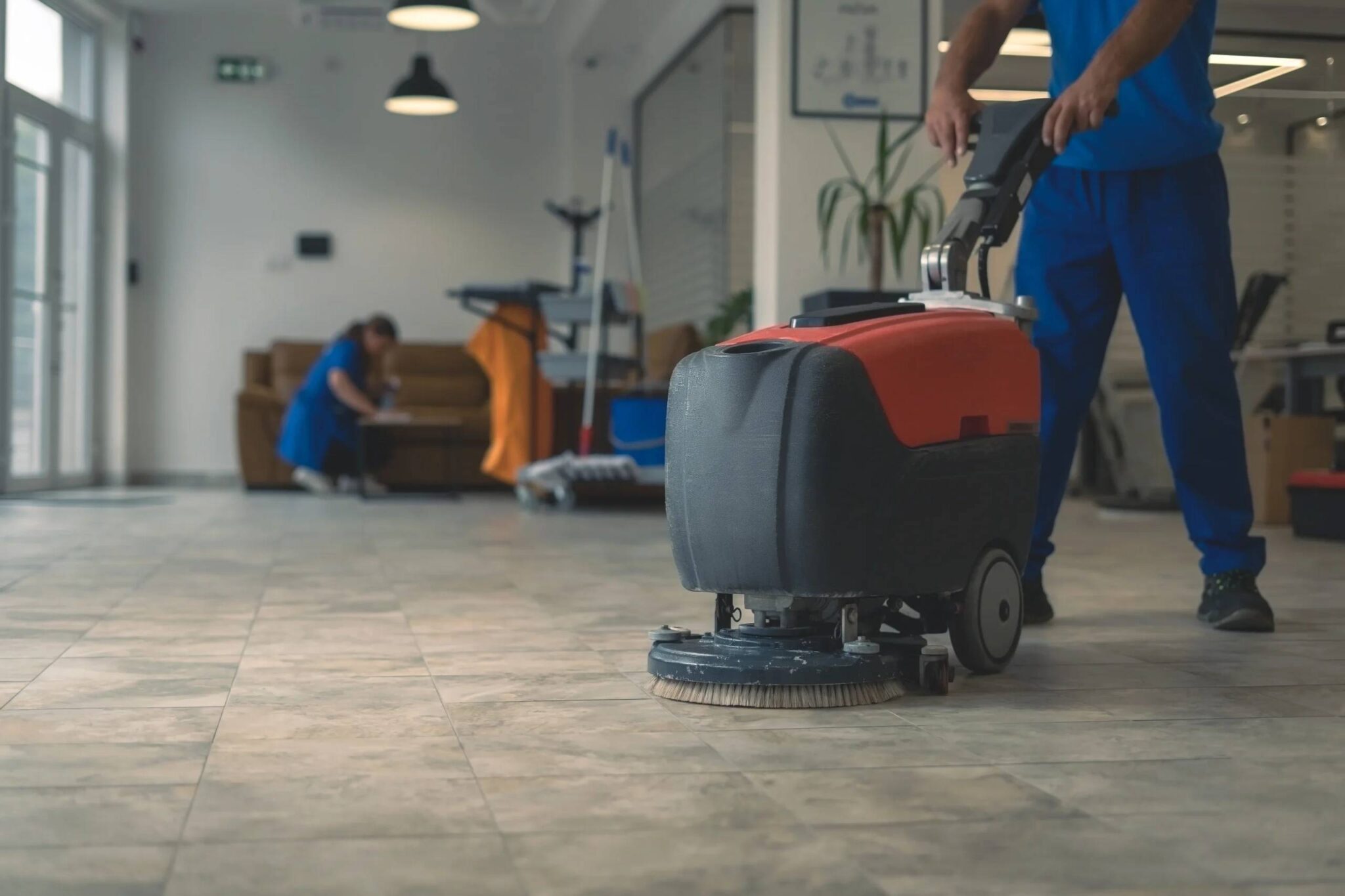
- Floor Care Requirements: Healthcare floors endure high foot traffic, wheel traffic from mobility devices, and chemical spills. Routine maintenance should be supported by professional commercial carpet cleaning and hard-floor care programs.
For healthcare providers in Chicago, Arlington Heights, and nearby communities such as Northbrook, Des Plaines, Glenview, Mount Prospect, and Buffalo Grove, selecting a responsive, locally managed partner is critical. Facilities operating throughout Cook County and Lake County are welcome to contact us to discuss dependable local support.
Scope of Work Across Diverse Clinical Environments
Every medical discipline operates with unique physical footprints and risk factors:
- Urgent Care and Walk-In Clinics: High patient volume requires frequent disinfection of exam tables, triage stations, and public entryways.
- Dental Practices: Operatories generate aerosols that settle across horizontal surfaces, cabinetry, and overhead fixtures, demanding thorough daily wipe-downs.
- Diagnostic Laboratories: Surfaces require careful chemical sanitization that avoids damaging delicate diagnostic equipment or introducing volatile fumes.
- Surgical & Specialty Suites: These environments require comprehensive terminal cleaning, including meticulous floor sanitization, wall washing, and sterile-boundary maintenance.
Partnering with a team experienced in disinfection and sanitization services ensures your clinical rooms remain hygienic and compliant week after week.
Frequently Asked Questions About Healthcare Sanitation Standards
What primary regulations govern clinical cleaning in Illinois?
Medical cleaning across Cook County and Lake County is governed by OSHA standards (particularly the Bloodborne Pathogens standard), CDC infection prevention guidelines, EPA disinfectant registration requirements, and IDPH health codes. Facilities seeking accreditation also align their environmental services with benchmarks established by The Joint Commission.
How often should high-risk medical surfaces be sanitized?
High-touch architectural surfaces (door knobs, transaction counters, shared seating) and clinical equipment contact points must be disinfected multiple times throughout operating hours, with a comprehensive terminal clean performed at the end of each business day. Disinfectant dwell times must always match the manufacturer’s EPA label instructions.
What is the main difference between general office cleaning and clinical cleaning?
General commercial cleaning focuses primarily on aesthetic upkeep, dust removal, and trash disposal. Clinical cleaning focuses on microscopic pathogen eradication, strict cross-contamination prevention, the use of hospital-grade disinfectants, and verifiable compliance with healthcare regulatory bodies.
Conclusion
Maintaining a safe healthcare facility requires an unwavering commitment to compliance, thorough sanitation protocols, and dependable oversight. When medical practices partner with an experienced provider, facility directors can focus on patient care knowing their environment meets the highest regulatory standards.
At SkyLine Cleaning Enterprise, we have supported commercial and medical facilities across Cook County and Lake County since 2007. As a family-owned and women-owned business founded by Anna Szczurek, we take pride in reliable supervision, fully insured operations, and individualized cleaning plans tailored to your facility’s exact layout. To help establish an uncompromising standard of cleanliness from day one, we provide our new contract clients with a complimentary deep cleaning on the first day of service, deploying an extra crew to reset the entire building.
If your facility is located in Arlington Heights, Chicago, Elk Grove Village, Glenview, Barrington, or surrounding communities, we invite you to contact us today to discuss your compliance requirements and request an individualized quote for your medical facility.