
The Ultimate Guide to Commercial Carpet Cleaning
Why Carpet Cleaning Commercial Facilities Matters More Than You Think
Quick answer: What is commercial carpet cleaning?
Commercial carpet cleaning is the professional deep cleaning of carpets in business facilities — offices, medical clinics, schools, warehouses, and more. It differs from residential cleaning in scale, method, frequency, and compliance requirements.
The most common methods used in commercial facilities:
| Method | Dry Time | Best For |
|---|---|---|
| Hot Water Extraction (HWE) | 6–12 hours | Deep restoration, heavy soiling |
| VLM Encapsulation | 1–3 hours | Routine maintenance, occupied spaces |
| Dry Compound | 30–60 minutes | Quick turnaround, low-traffic areas |
How often should commercial carpets be cleaned?
- Reception areas and lobbies: every 1–3 months
- Office workstations: 1–2 times per year
- Medical facilities and schools: more frequently, based on traffic and compliance
- High-traffic corridors: on a maintenance schedule, not a calendar
Here’s something most facility managers don’t expect: commercial carpets can hold up to four times their own weight in soil before they even look dirty. By the time a carpet looks worn or dingy, the damage to the fibers is already well underway.
And it’s not just about appearance. Studies show commercial carpet spaces can harbor around 200,000 bacteria per square inch — roughly 4,000 times more than some toilet seats. For businesses in Cook County and Lake County, IL, that’s a real concern — especially in medical offices, schools, and high-traffic corporate lobbies.
The good news? A consistent, well-managed carpet cleaning program protects your investment, supports indoor air quality, and keeps your facility looking professional year-round. It can even push carpet replacement timelines out by 3–5 years.
I’m Anna Szczurek, founder of SkyLine Cleaning Enterprise Co. and a commercial cleaning professional with nearly 20 years of experience managing carpet cleaning commercial programs across hundreds of facilities in the Chicago suburbs. In this guide, I’ll walk you through everything you need to know to make the right decisions for your facility.
Commercial vs. Residential Carpet Care: Key Differences
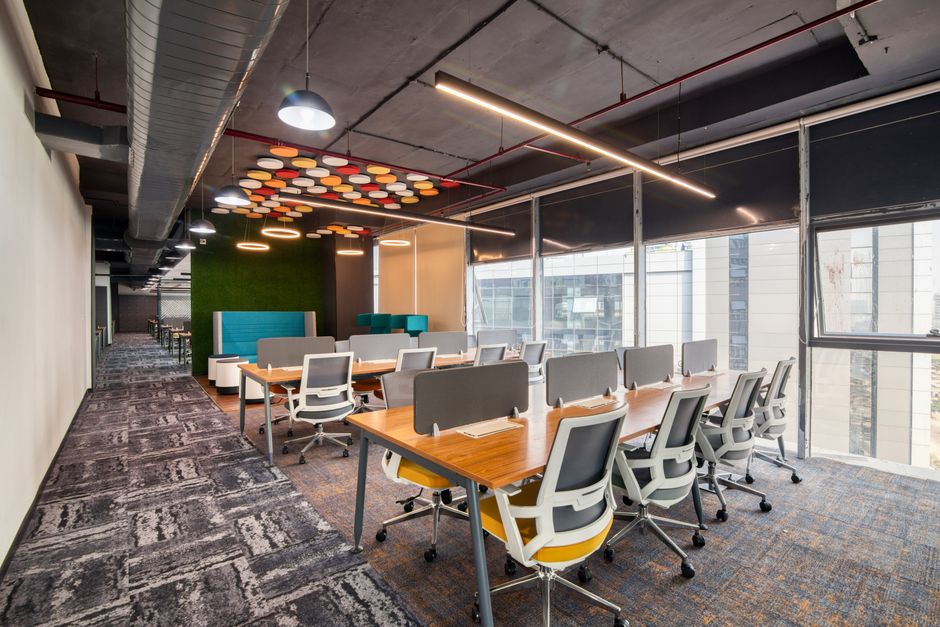
When many people think of carpet cleaning, they picture the standard residential steam cleaners that visit neighborhood homes. However, maintaining carpets in a commercial environment is an entirely different discipline. Understanding these differences is critical for property managers and operations directors who need to protect their physical assets.
First, consider the physical construction of the carpet itself. Most homes feature thick, plush carpets installed over a separate foam pad to provide a soft feel underfoot. In contrast, commercial spaces utilize low-pile, high-density loop carpets, which are often glued directly to the concrete subfloor. This glue-down installation prevents the carpet from shifting under heavy rolling loads, such as office chairs, mail carts, and utility dollies.
The fibers used in commercial settings are also engineered differently. They are typically made from highly durable, solution-dyed nylon or polypropylene (olefin) designed to resist crushing, fading, and severe wear-and-tear. To understand how these materials perform under different conditions, you can learn more about commercial flooring types.
Because of this unique construction, commercial carpets do not hide soil the way residential carpets do. Instead, dirt, grit, and moisture tracked in from the outdoors get trapped in the tight weave of the fibers. In areas like Arlington Heights and Chicago, IL, where winter weather brings heavy snow, slush, and highly abrasive road salt, this tracked-in material acts like sandpaper under the feet of hundreds of daily visitors. Without professional intervention, these abrasive particles grind against the carpet fibers, cutting them at the base and causing permanent “traffic lanes” that cannot be reversed. If you are managing a facility in this area, establishing a local maintenance routine with a professional service is essential to prevent this premature wear.
Furthermore, the scale of commercial carpet maintenance is vastly larger. While a residential cleaning might cover a few hundred square feet of light foot traffic, a commercial job in a corporate headquarters or a school in the Chicago area can easily span tens of thousands of square feet. This requires heavy-duty, professional equipment, highly structured project management, and strict adherence to safety and compliance standards.
Best Practices for Carpet Cleaning Commercial Facilities

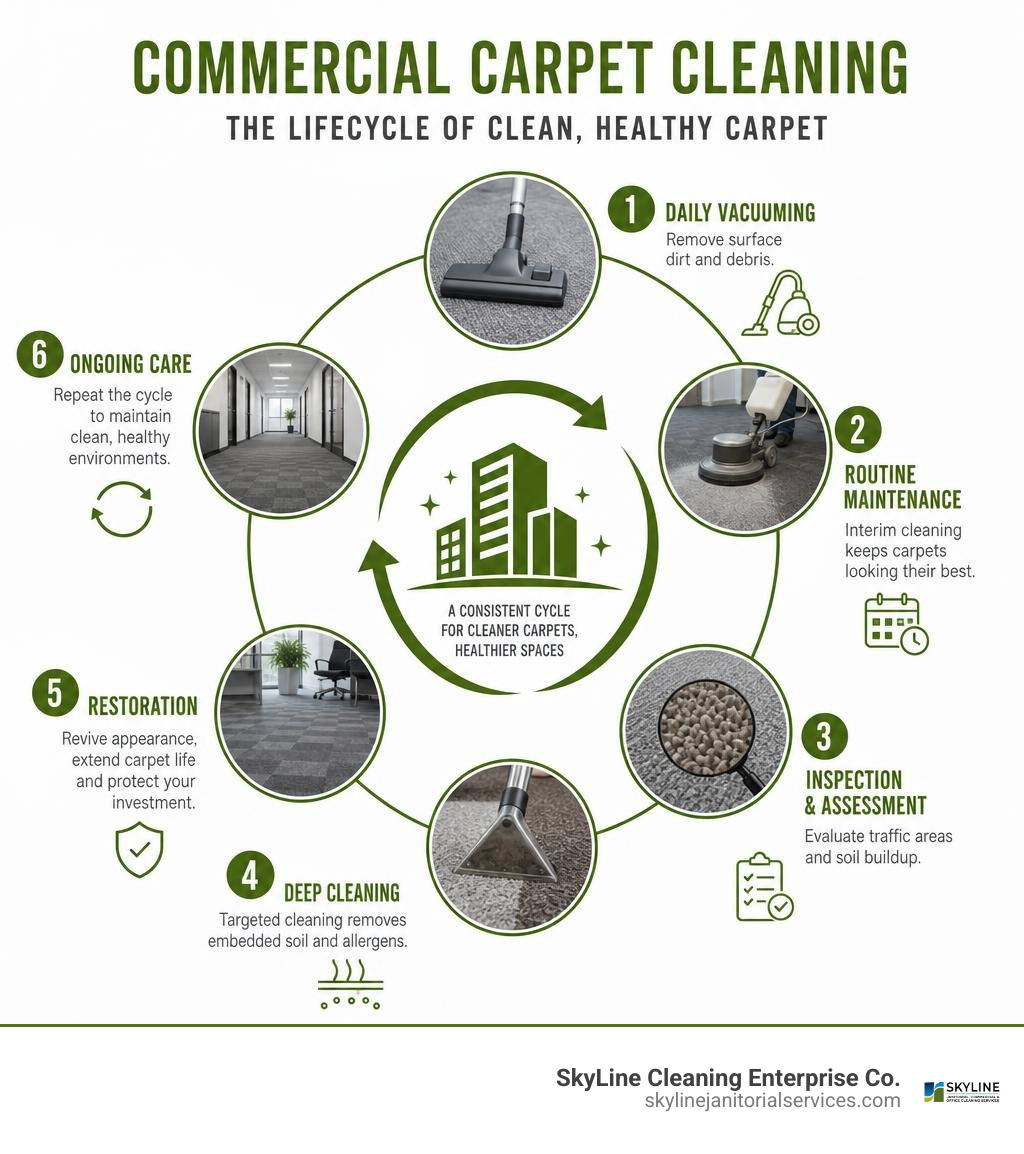
To keep commercial carpets performing well over their intended lifespan, facility managers must move away from reactive cleaning—only calling a professional when the carpet looks visibly soiled—and adopt a proactive, structured maintenance program.
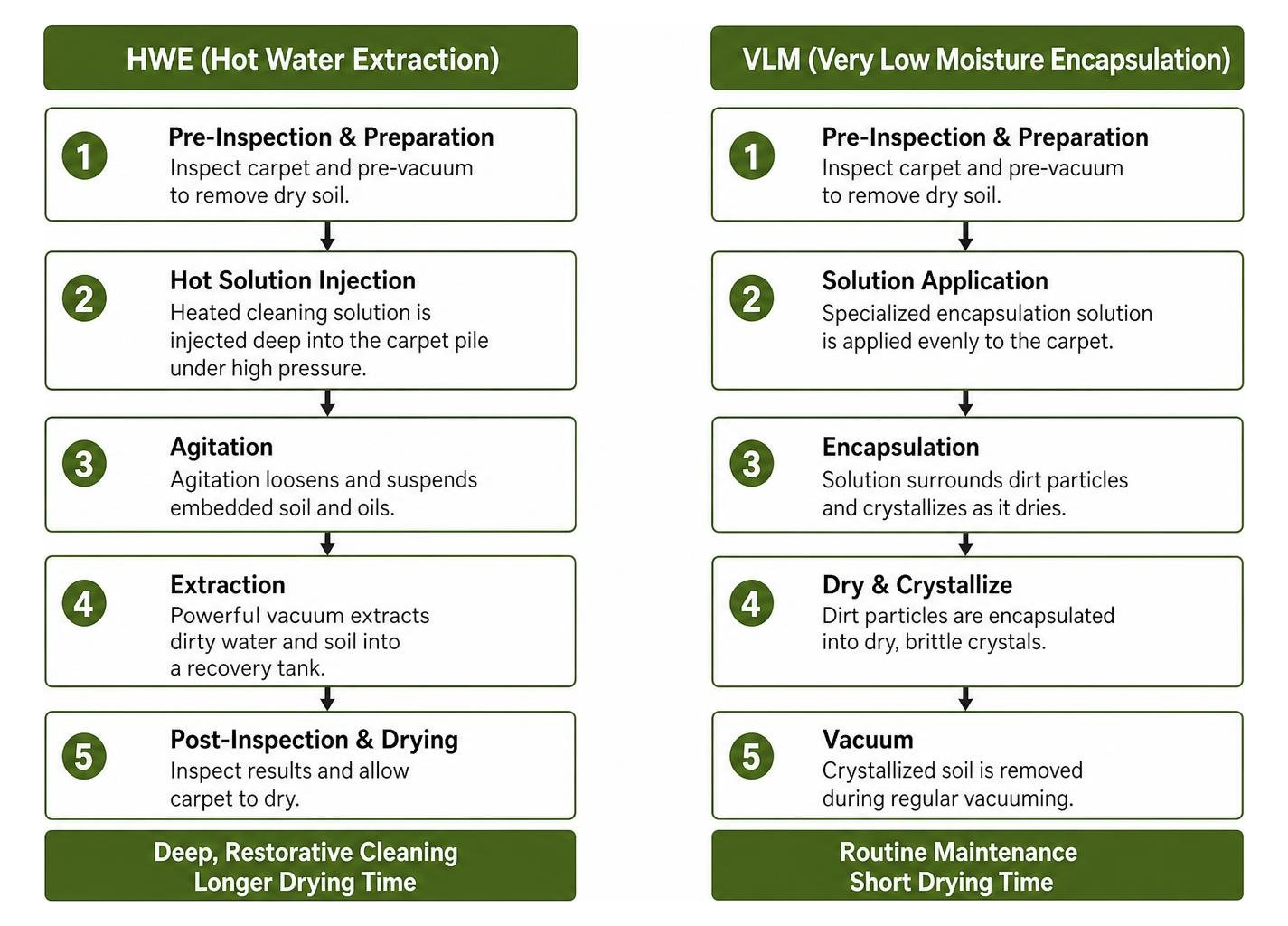
An effective commercial carpet program relies on two primary professional cleaning methods: Hot Water Extraction (HWE) and Very Low Moisture (VLM) encapsulation.
Hot Water Extraction, often referred to colloquially as steam cleaning, is the gold standard for deep, restorative cleaning. During this process, a heated cleaning solution is injected deep into the carpet pile under high pressure to loosen embedded dirt, oils, and biological contaminants. Almost instantly, a powerful vacuum system extracts the dirty water and soil back into a holding tank. This method is highly effective at removing deep-set grime, but it requires a longer drying window.
For routine maintenance and interim cleaning, Very Low Moisture (VLM) encapsulation has become the preferred choice for busy facilities. In this process, a specialized chemical solution is applied to the carpet. This solution surrounds and encapsulates dirt particles, crystallizing them as they dry. Once crystallized, these dry particles are easily removed during regular vacuuming. VLM uses significantly less water than traditional extraction methods, allowing the carpet to dry in a fraction of the time.
Implementing these methods correctly requires local expertise and professional-grade machinery. For businesses operating in Arlington Heights and the surrounding Chicago suburbs, partnering with a dedicated regional provider ensures that your carpets receive the precise balance of deep extraction and interim encapsulation they need to stay clean and durable.
Frequency Guidelines for Carpet Cleaning Commercial High-Traffic Areas
Determining how often to clean your carpets should not be a guessing game. It should be based on actual foot traffic, building occupancy, and the specific activities occurring in each zone of your facility.
- High-Traffic Zones (Lobbies, Reception Areas, Main Corridors): These areas experience continuous foot traffic and direct exposure to outdoor elements. During the harsh winter months in the Chicago area, these zones should be professionally cleaned every 1 to 3 months to prevent salt damage and soil buildup.
- Medium-Traffic Zones (Conference Rooms, Inner Hallways, Shared Offices): These spaces generally require professional cleaning 2 to 4 times per year to maintain a fresh appearance and prevent soil from migrating into low-traffic areas.
- Low-Traffic Zones (Individual Workstations, Executive Suites, Storage Areas): These areas can typically be maintained with professional cleaning 1 to 2 times per year.
- Specialized Facilities (Medical Clinics, Schools, Daycares): Due to strict hygiene requirements and compliance standards, these spaces require more frequent, specialized sanitization. For example, educational and municipal facilities in northern Illinois often schedule deep extraction services during seasonal breaks. Utilizing a local specialist helps ensure these facilities meet all required cleanliness benchmarks before occupants return.
Selecting the Right Method for Carpet Cleaning Commercial Spaces
Choosing between VLM encapsulation and Hot Water Extraction depends on your operational constraints, the current soil load, and the physical characteristics of your building.
If your facility operates 24/7 or has tight scheduling windows where areas cannot be blocked off for long, VLM encapsulation is often the best choice. It is quiet, highly efficient, and allows the carpet to be walked on shortly after the process is complete.
On the other hand, if your carpets have gone several years without professional care, or if they have suffered heavy soil buildup, grease, or major spills, Hot Water Extraction is necessary to flush out the embedded contaminants.
The backing of your carpet also plays a role. Direct-glue installations over concrete must be dried quickly to prevent moisture from trapping underneath, which can weaken the adhesive or lead to microbial growth. A professional service provider will evaluate these variables during an initial walkthrough. If you are located in Arlington Heights or Chicago, consulting with a specialized team can help you determine the optimal method for your building’s specific layout and carpet type.
Managing Drying Times and Minimizing Business Downtime
One of the most common concerns we hear from facility managers is: “How long will our carpets be wet, and when can our staff return to work?” Business disruption is a major factor in facility management, and wet carpets can halt operations or create safety hazards, such as slip-and-fall risks when walking from wet carpet onto hard flooring.
Several factors influence how quickly a commercial carpet dries:
- The Cleaning Method Used: Hot water extraction leaves more moisture in the carpet, typically requiring 6 to 12 hours to dry completely. In high-density carpets or humid conditions, this can extend up to 24 hours. VLM encapsulation, however, requires very little water, allowing carpets to dry in just 1 to 3 hours.
- Relative Humidity and Temperature: High indoor humidity slows down evaporation. Maintaining a consistent HVAC temperature between 68°F and 74°F helps facilitate faster drying.
- Air Movement: Standing air slows the drying process. The use of professional, high-velocity air movers is critical to circulate air across the floor and speed up evaporation.
To minimize downtime, we recommend scheduling deep extraction services after hours, over weekends, or during planned facility shutdowns. This allows the carpet to dry completely without interrupting daily business operations. For corporate offices and commercial properties in Arlington Heights and Chicago, coordinating with a flexible local service allows you to arrange convenient overnight or weekend cleaning windows, ensuring your team returns to a clean, dry, and fully operational workspace on Monday morning.
Indoor Air Quality, Odor Removal, and Compliance Standards
A clean carpet does more than just look professional; it acts as a giant filter for your building, trapping airborne dust, pollen, dander, and other particulates. However, like any filter, a carpet can only hold so much before it becomes saturated. Once saturated, regular foot traffic kicks those trapped allergens back up into the breathing zone, degrading your building’s indoor air quality (IAQ).
Professional hot water extraction is highly effective at improving IAQ. The high temperature of the water used in professional extraction systems kills biological contaminants like dust mites, which cannot survive temperatures above 130°F. This process removes the deep-seated particulate matter that standard commercial vacuums simply cannot reach.
In sensitive environments like healthcare facilities, senior living centers, and schools, maintaining clean carpets is also a matter of regulatory compliance and occupant health. For instance, in memory care wings or assisted living facilities, biological odors and moisture-related issues are common challenges. Masking these smells with heavy perfumes does not solve the problem and can irritate occupants with respiratory sensitivities. Instead, professional cleaners use targeted enzymatic treatments. These enzymes break down organic matter—such as urine, food spills, and milk—at the molecular level, completely neutralizing the odor at its source.
For facilities prioritizing occupant health and strict safety standards in Arlington Heights and Chicago, partnering with a compliant provider ensures that your carpet maintenance program aligns with industry guidelines and local health regulations.
Frequently Asked Questions About Commercial Carpet Care
To help you plan your facility’s maintenance budget and operational schedule, we have compiled a comparison of the primary commercial carpet cleaning methods:
| Method | Best Suited For | Key Advantage | Disadvantage | Typical Drying Time |
|---|---|---|---|---|
| Hot Water Extraction (HWE) | Deep restorative cleaning, heavy soil, stain removal | Deepest clean, removes allergens and bacteria | Longer drying time, requires after-hours scheduling | 6–12 hours |
| VLM Encapsulation | Interim maintenance, high-traffic corridors, occupied offices | Extremely fast drying, quiet operation, cost-effective | Does not remove heavy, deeply embedded soil | 1–3 hours |
| Dry Compound | Emergency spot cleaning, immediate access areas | No drying time required, zero water used | Limited deep-cleaning capability | 0–1 hours |
For more details on local pricing structures and market rates in the wider metropolitan area, you can consult the Chicago carpet cleaning cost guide.
How much does commercial carpet cleaning cost?
Commercial carpet cleaning is typically priced using one of three models:
- Square Footage Rate: This is the most common model for larger facilities. The rate per square foot generally decreases as the total area increases, making large-scale cleanings highly efficient.
- Flat Minimum Fee: For smaller offices or localized spot-cleaning jobs, providers usually charge a flat minimum fee to cover mobilization, equipment setup, and travel costs.
- Ongoing Maintenance Contract: Many businesses prefer to lock in predictable monthly or quarterly rates by integrating carpet care into an annual commercial janitorial contract.
The final cost of a project is influenced by the level of soil, the layout of the space (such as open areas versus tight cubicles), whether furniture needs to be moved, and whether specialized treatments—like enzymatic odor neutralizers or fiber protectors—are required.
Can commercial carpet cleaning be done after hours?
Yes. In fact, the vast majority of professional commercial carpet cleaning is performed after hours, overnight, or over weekends. This scheduling flexibility is essential for maintaining business continuity, preventing slip-and-fall hazards on wet floors, and allowing the cleaning technicians to work efficiently without disrupting employees or clients.
How does professional cleaning extend carpet life?
Carpets fail from the bottom up. When dirt and microscopic grit settle deep into the carpet backing, they act like tiny blades. Every time someone walks across the floor, these particles grind against the base of the carpet fibers. Over time, this mechanical action cuts the fibers, leading to thinning, shedding, and permanent wear patterns.
By performing regular extraction and encapsulation cleaning, you remove these abrasive particles before they can cause structural damage. Keeping your carpets clean and well-maintained can extend their useful life by 3 to 5 years, providing a significant return on investment and delaying expensive capital expenditures.
Conclusion
Managing a commercial facility requires balancing appearance, budget, and operational efficiency. Your carpets represent a significant financial investment, and maintaining them properly is a key part of protecting that asset.
At SkyLine Cleaning Enterprise Co., we have spent nearly 20 years refining our approach to commercial floor care. As a women-owned and family-owned business founded in 2007, we understand that facility managers in Cook County and Lake County, IL, need a dependable, consistent, and highly professional cleaning partner.
The number one reason businesses switch to us is compliance. We understand that an unreliable cleaning crew or a lack of proper supervision can disrupt your operations and compromise your facility’s standards. That is why we provide fully insured services, utilize our own professional equipment, and maintain strict supervisory oversight on every project.
We serve commercial facilities within a 40-mile radius of Arlington Heights, IL, including corporate offices, medical buildings, schools, and warehouses. Please note that we specialize exclusively in commercial cleaning, VCT floor waxing, and commercial carpet care; we do not offer residential cleaning or upholstery services.
To ensure your facility starts with the highest possible standard of cleanliness, we are pleased to offer a complimentary deep cleaning on the first day of service for our new contract clients. On your first day, we send an additional, dedicated crew to thoroughly deep clean your entire facility, setting a high baseline for our ongoing maintenance.
Ready to experience a more reliable approach to facility care? Schedule a consultation with our commercial carpet cleaning experts today, and let us design a customized maintenance plan tailored to your building’s needs.