
Why Hire Commercial Restaurant Cleaning Services in Chicago IL?
Why Hire Professional Restaurant Cleaning Services in Chicago?
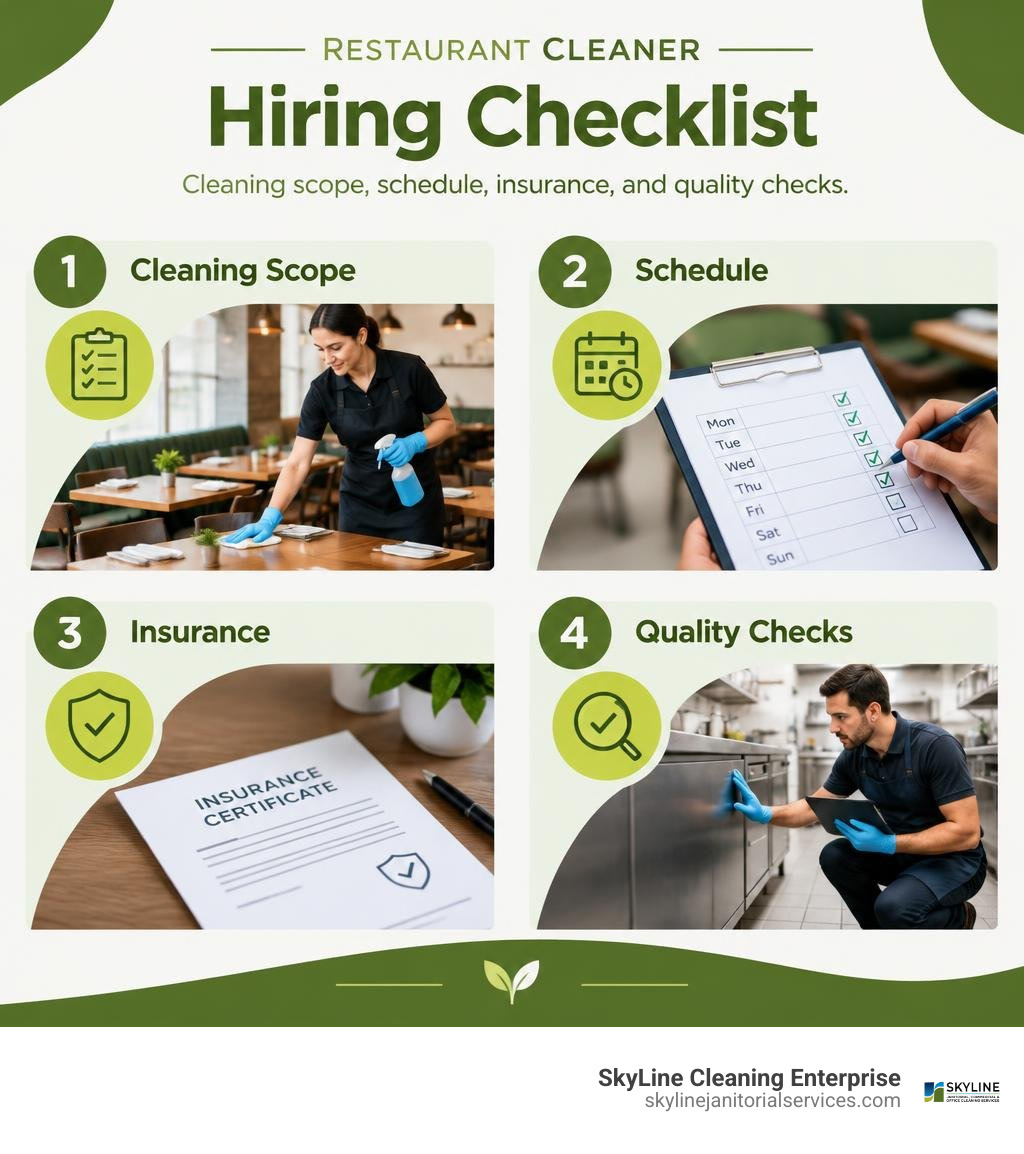
A good restaurant cleaning service should do more than cover the closing checklist. Look for a team that can clean dining areas, restrooms, and agreed-upon back-of-house surfaces around your operating hours. Ask for a written task list, proof of insurance, and regular quality checks. For grease traps and kitchen exhaust systems, confirm who handles that work and whether a separate specialist is needed. The CDC’s food safety guidance reinforces why consistent sanitation matters for any food service operation.
I’m Anna Szczurek, founder of SkyLine Cleaning Enterprise in 2007. My experience leading commercial cleaning work informs this comprehensive guide for operations directors, facility managers, and restaurant owners seeking reliable facility sanitation in Arlington Heights, IL, and Chicago, IL.
Key Reasons to Invest in Restaurant Cleaning Services in Chicago, IL
Operating a successful food service establishment in Arlington Heights or Chicago requires juggling endless moving parts, from supply chains and menu development to labor management and guest satisfaction. Amid these daily pressures, maintaining impeccable sanitation is non-negotiable. Local dining regulations and strict food safety standards demand absolute rigor, making dedicated restaurant cleaning services a vital operational investment rather than an optional expense.
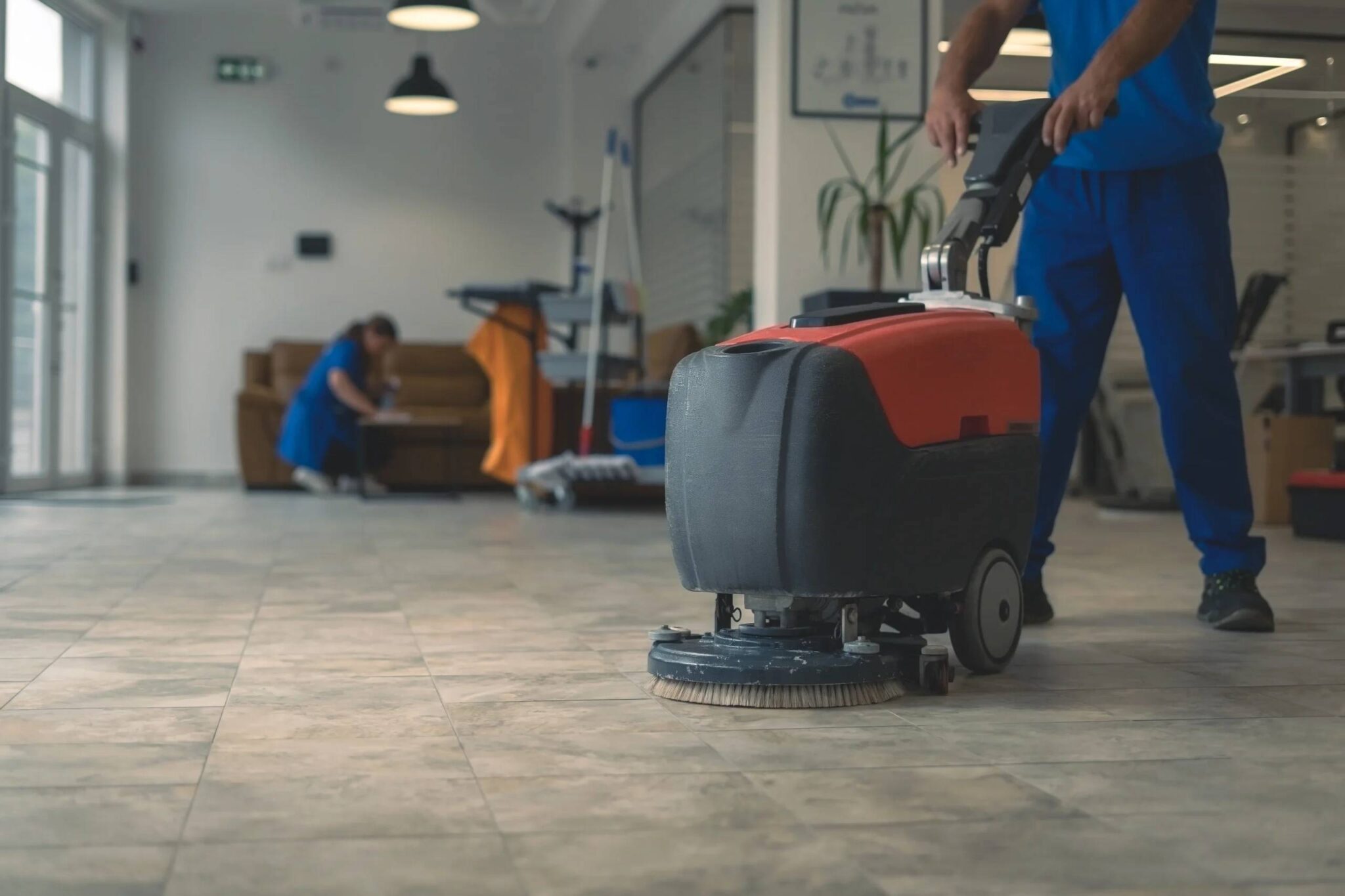
In a busy food service environment, cleanliness directly impacts your bottom line. When partnering with dedicated restaurant cleaning services, Chicago, IL dining venues protect customer trust, maintain audit-ready facilities every single day, extend the operational life of heavy kitchen equipment, and support strict compliance with sanitation expectations in Chicago and Arlington Heights.
Why Routine In-House Staff Cleaning Falls Short
Relying exclusively on line cooks, dishwashers, and servers for deep sanitation frequently leads to compromised standards. After an intense ten-hour shift on their feet, closing staff naturally suffer from fatigue. When employees are rushing to catch late-night transit or return home, their closing duties often turn into surface-level wiping rather than thorough sanitation.
This closing-shift rush creates several operational vulnerabilities:
- Hidden grease accumulation: Cooking oil aerosols settle into grout lines, behind cooking ranges, and beneath prep tables where tired staff rarely reach during nightly closings.
- Cross-contamination risks: Rushed staff often use the same mop buckets or cloths across multiple areas, inadvertently spreading bacteria between dish pits, restrooms, and food prep stations.
- Inconsistent execution: Without dedicated quality control and oversight, cleaning standards fluctuate wildly depending on who is scheduled for the closing shift.
- Pest vulnerabilities: Overlooked food particles under heavy equipment provide an open invitation for pests, threatening your public inspection record and operational license.
Delegating heavy sanitation to specialized commercial crews relieves your culinary team, allowing them to focus entirely on food quality and customer hospitality.
How Dedicated Sanitation Teams Ensure Inspection Readiness
For Chicago restaurants, the Chicago Department of Public Health (CDPH) enforces stringent food protection codes to safeguard public health, while Arlington Heights operators must also maintain consistent sanitation practices that support local inspection readiness. An unexpected visit from an inspector should never cause panic among management. Dedicated sanitation providers maintain audit-ready facilities every single day through systematic checklists and verified sanitation methods.
Professional cleaning technicians follow systematic protocols that address every regulatory checkpoint:
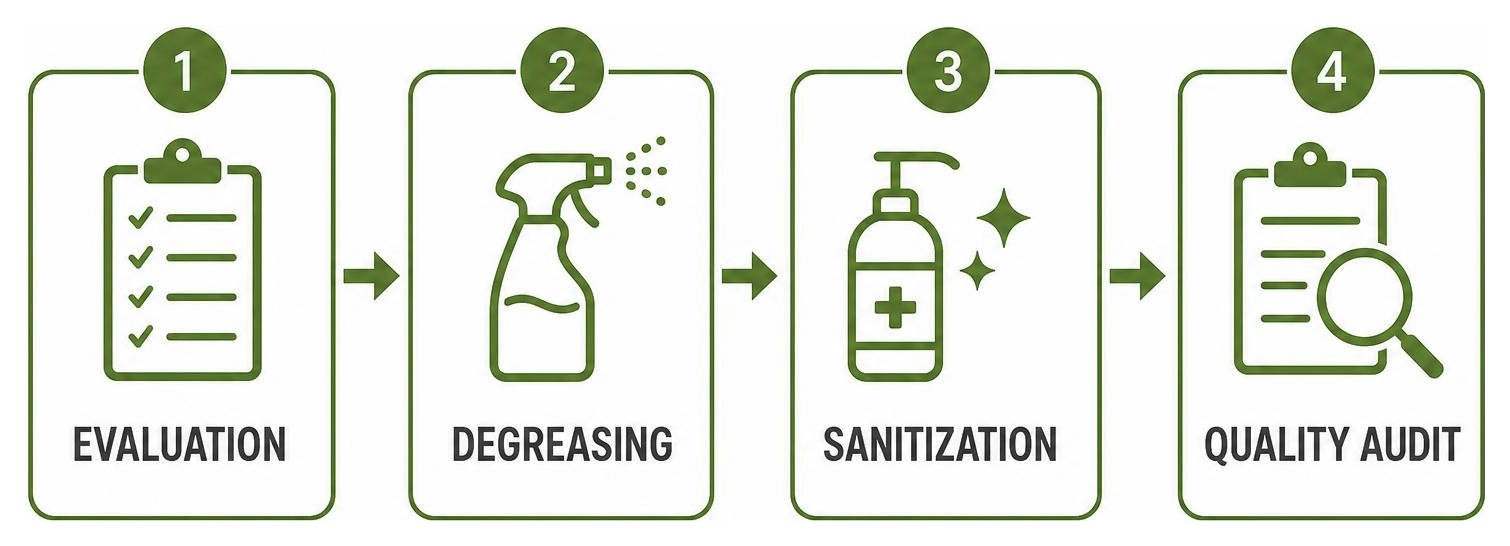
By following structured sanitation programs outlined in our guide to commercial food service cleaning, facility managers eliminate compliance guesswork. Consistent, professional sanitization safeguards your food safety track record and maintains the high standards expected by local regulatory agencies.
Core Areas Addressed by Commercial Dining Facility Sanitation
Commercial food service sanitation requires distinct technical approaches for guest-facing spaces and heavy-duty food production zones. Proper facility care pairs daily janitorial maintenance with periodic deep cleaning procedures like tile scrubbing and hard surface care.
| Cleaning Zone | Daily In-House Closing Scope | Periodic Professional Commercial Scope |
|---|---|---|
| Kitchen Cooking Line | Wipe flat tops, clear grill grates, sweep loose debris | Pull equipment forward, heavy degreasing of walls, scrub quarry tile grout |
| Walk-In Coolers | Sweep floors, wipe active prep spills | Sanitize wire shelving, mold remediation on door gaskets, deep floor extraction |
| Floor Drains | Pour hot water rinse down main drains | Mechanical scrub, remove organic biofilm, treat trough basins |
| Dining Room & Entry | Sweep, damp mop walkways, wipe table surfaces | High dusting, baseboard cleaning, deep carpet extraction, commercial floor cleaning |
| Restrooms | Empty trash bins, spot-wipe mirrors and sinks | Full chemical sanitation of partitions, deep fixture descaling, floor scrubbing |
Front-of-House Versus Back-of-House Priorities
Front-of-house hygiene shapes customer perception before a single appetizer arrives at the table. Entryways, dining rooms, bar tops, and restrooms require immaculate presentation. Commercial restroom sanitation is particularly critical; clean, fully stocked restrooms with sanitized partitions, spot-free mirrors, and descaled fixtures directly influence online reviews and repeat patronage.
Back-of-house sanitation centers around risk mitigation, grease control, and microbiological safety. Specialized cleaning addresses:
- Cooking line degreasing: Thoroughly clearing baked-on oils from equipment exteriors, stainless steel backsplashes, and floor perimeters.
- Walk-in cooler detailing: Eliminating mold spores from rubber door gaskets, scrubbing drainage pans, and sanitizing storage surfaces.
- Floor drain remediation: Scrubbing floor troughs to break down the stubborn biofilms where bacteria and fruit flies thrive.
- High-touch prep station disinfection: Sanitizing surfaces that come into indirect contact with food prep tools during service.
Tailoring Cleaning Schedules to Fast-Casual and Fine Dining
No two dining venues operate identically. A high-turnover fast-casual restaurant in Chicago handling high fryer volumes faces completely different cleaning demands than an upscale fine dining room in Arlington Heights.
Fast-casual establishments require intensive floor degreasing to prevent slip-and-fall hazards caused by tracked oils, alongside frequent sanitation of self-serve drink stations and customer touchscreens. Conversely, fine dining establishments demand meticulous detailing of upscale architectural finishes, delicate light fixtures, acoustic ceiling tiles, and specialized flooring. Our practical restaurant janitorial services ensure these distinctive operational profiles receive precisely calibrated care.
What to Look for in a Chicagoland Commercial Restaurant Cleaner
Selecting an outside vendor to handle your facility sanitation is a major operational decision that directly influences your restaurant’s reputation, safety rating, and bottom line. Restaurant and facility managers in Chicago and Arlington Heights should evaluate prospective vendors using clear professional benchmarks:
- Comprehensive Commercial Insurance: Verify active policies for General Liability, Workers’ Compensation, and Auto Insurance to protect your business from liability.
- Supervisor-Led Quality Control: A dependable cleaning partner utilizes hands-on supervisors who conduct regular inspections to ensure accountability and consistent execution.
- Tailored Facility Scopes: Avoid rigid, one-size-fits-all contracts. Your cleaning program should align directly with your kitchen volume, square footage, architectural finishes, and operating hours.
- Dedicated Equipment and Supplies: Commercial providers must arrive fully equipped with their own commercial-grade cleaning equipment, extraction tools, and specialized degreasing materials.
- Demonstrated Local Track Record: Choose an established company with roots in Arlington Heights and Chicago that understands local health department requirements and inspection criteria.
- Clear Communication Protocols: Ensure your service provider maintains direct, responsive communication channels so adjustments can be made promptly as facility needs evolve.
For operations directors and facility managers, the right partner should also connect sanitation to broader facility maintenance priorities, from floor care to high-touch disinfection.
Frequently Asked Questions About Chicago Restaurant Cleaning
How often should restaurants schedule professional deep cleaning?
While daily commercial janitorial services maintain dining rooms, restrooms, and basic kitchen hygiene, intensive deep cleaning should be scheduled based on cooking volume. High-volume kitchens with heavy fryer or charbroiler use benefit from monthly back-of-house deep cleaning. Moderate-volume facilities typically schedule deep degreasing quarterly, paired with biannual deep carpet cleaning or hard floor care.
What kitchen zones fail health inspections most frequently?
Health inspectors frequently cite grease accumulation hidden behind cooking lines, mold growth on walk-in refrigeration door gaskets, clogged floor drains harboring organic biofilm, and dirty soda dispenser nozzles. Professional commercial cleaners target these specific blind spots during scheduled deep cleans.
How does professional commercial cleaning control kitchen odors and pests?
Kitchen odors and pests stem from decaying organic matter trapped in hard-to-reach areas. Professional cleaning teams eliminate the root cause by mechanically scrubbing floor drains, degreasing the floor-wall junctions beneath cooking equipment, and neutralizing bacterial buildup rather than merely masking smells with surface deodorizers.
Conclusion
At SkyLine Cleaning Enterprise, we understand the relentless operational demands faced by operations directors, property managers, and restaurant owners in Arlington Heights and Chicago. Headquartered in Arlington Heights, IL, our women-owned and family-owned company has delivered dependable commercial sanitation since 2007. With nearly 20 years of experience, our team of 20-50+ trained cleaning professionals delivers tailored commercial janitorial services, VCT floor strip and wax, commercial carpet cleaning, commercial floor scrubbing, and facility maintenance designed to keep your dining establishment audit-ready.
Compliance is the number one reason commercial clients choose SkyLine. When previous cleaning vendors prove unreliable or lack adequate supervision, we step in with structured quality control, fully insured operations, and our own professional equipment and supplies. To establish the highest standard of cleanliness from day one, our new clients receive a complimentary deep cleaning on their first day of service, completed by a dedicated extra crew. Whether your facility operates in Arlington Heights or Chicago, we invite you to contact us today to request an individualized commercial cleaning plan and quote for your dining facility.