
Floor Waxing: Mastering 4 Perfect Steps
Why Floor Waxing Transforms Your Commercial Space
Floor waxing is a crucial maintenance technique that protects your floors and creates a brilliant shine. Here’s what you need to know:
Key Benefits:
- Creates a protective barrier against scratches, stains, and moisture
- Improves durability and extends floor life by years
- Improves safety with better slip resistance
- Makes cleaning easier and more effective
- Delivers a professional, high-gloss appearance
Best Floor Types for Waxing:
- Vinyl Composition Tile (VCT)
- Linoleum
- Concrete and terrazzo
- Unfinished cork
- Sealed stone floors
Avoid waxing: Urethane-finished hardwood, no-wax vinyl, or laminate flooring.
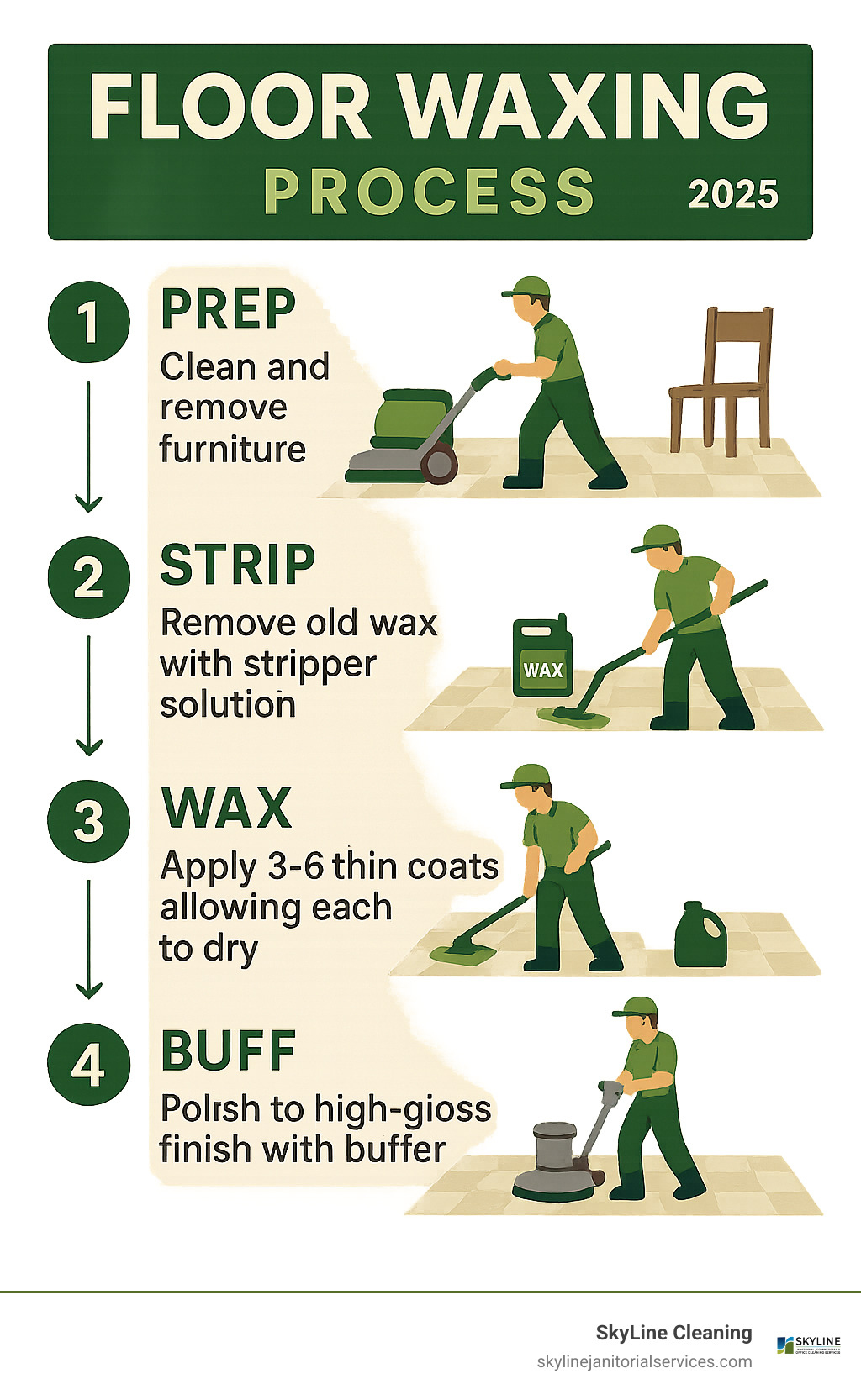
The process involves four main steps: preparation and cleaning, stripping old wax, applying multiple thin coats of new wax, and buffing to a mirror-like finish. Most commercial floors need 3-6 coats of wax depending on traffic, with high-traffic areas requiring more protection.
Floor waxing isn’t just about aesthetics—it’s a smart investment. As one cleaning professional noted, “Professional floor waxing improves and maintains the professional appearance of a commercial space for a long time.” The protective layer also makes floors easier to maintain.
I’m Anna Szczurek, founder of SkyLine Commercial Cleaning, and I’ve been perfecting floor waxing techniques for businesses across New York City since 2007. My team and I have transformed countless commercial spaces, from medical facilities to warehouses, delivering exceptional results every time.
Why Wax Your Floors? The Protective Power of a Proper Shine
Think of floor waxing as giving your floors a personal bodyguard. That brilliant shine looks fantastic, but what’s happening beneath the surface is even more impressive.
When you see freshly waxed floors, you’re not just seeing beauty—you’re witnessing science. The glossy surface is a hardworking protective barrier defending your flooring investment.
The Science of Protection
When you apply floor wax, you create a sacrificial layer that takes the punishment so your actual floor doesn’t have to. As it dries, it forms a durable seal that acts like armor.
This protective seal works in several ways. It increases durability by absorbing the daily beating from foot traffic, rolling chairs, and moving equipment. These forces wear down the replaceable wax layer, not your expensive flooring.
The stain resistance benefit is particularly impressive. Spills sit on top of the wax barrier instead of soaking in, giving you time to clean up accidents before they become permanent stains.
Scratch minimization occurs as wax fills in tiny imperfections and surface scratches that make floors look worn. It’s like a mini facelift for your floor.
The wax also acts as a moisture barrier, repelling water and other liquids that could cause warping or damage. Plus, it preserves your underlying finishes by preventing dirt and debris from grinding against the original floor surface.
One of my favorite benefits is how waxed floors make cleaning so much easier. Dirt can’t penetrate the sealed surface, so regular maintenance is more effective and requires less effort.
Aesthetics and First Impressions
Floors cover a lot of visual real estate. A properly waxed floor doesn’t just look clean; it signals professional quality.
That high-gloss finish transforms tired, dull flooring into something that looks almost new. The difference is so dramatic that visitors might assume you’ve installed new floors.
First impressions matter in business, and gleaming floors send a powerful message about your attention to detail and commitment to quality. Clients and customers notice these details, even subconsciously.
The improved light reflection from waxed surfaces brightens your entire space, making it feel more open and inviting. It’s like getting better lighting without changing a bulb.
Most importantly, that pristine appearance reinforces the perception of a clean, hygienic environment. Visible cleanliness is essential for building trust with everyone who enters your space.
Before You Begin: Choosing the Right Tools and Materials
Using the wrong tools for floor waxing can result in a streaky mess. Proper preparation is crucial for success. Like cooking, floor care requires the right ingredients and equipment. Taking time to assess your floors and gather proper materials will save you frustration.
What Types of Floors Can Be Waxed?
A common mistake is assuming all floors can be waxed. Floor waxing is great for some surfaces but can damage others.
Floors that love wax include Vinyl Composition Tile (VCT), a common commercial flooring. Wax protects VCT from heavy foot traffic. Linoleum also responds wonderfully to waxing. Concrete, terrazzo, and unfinished cork benefit from wax. Sealed natural stone like limestone or granite can be waxed for shine and protection. Marmoleum and some rubber flooring can also be waxed. Unsealed hardwood floors are excellent candidates for floor waxing; it’s a traditional way to protect and beautify them.
However, some floors should never be waxed. Urethane-finished hardwood already has a protective coating; wax will create a cloudy mess. No-wax vinyl and laminate flooring will become sticky if waxed. Ceramic and porcelain tiles don’t absorb wax well, leaving a slippery, hazy surface. Unsealed natural stone can absorb wax unevenly, creating blotches. Never wax textured or non-slip floors, as it compromises their safety features.
Choosing Your Wax: Paste vs. Liquid vs. Polish
Choosing the right wax is key. Each type has a specific purpose.
Paste wax is incredibly durable, lasting 2 to 5 years. It requires effort to apply and buff but provides a deep shine and excellent protection. It’s ideal for unvarnished hardwood, true linoleum, and VCT.
Liquid wax is easier to apply than paste wax and offers solid protection for 1 to 2 years. It’s a good middle ground for easier application without sacrificing much durability.
Silicone polish is for urethane-finished floors or surfaces where traditional wax isn’t suitable. It improves shine but offers less protection than true wax.
You’ll also encounter solvent-based versus water-based options. Solvent-based waxes are traditional, perfect for unsealed hardwood, and offer robust protection. Water-based formulas (often called “floor finishes”) contain modern polymers and are common on commercial floors like VCT.
While some products are “no-buff,” I recommend buffable formulas. Buffing creates the best mirror-like finish.
Essential Equipment and Safety Gear
Having the right equipment is the difference between a professional job and a DIY disaster.
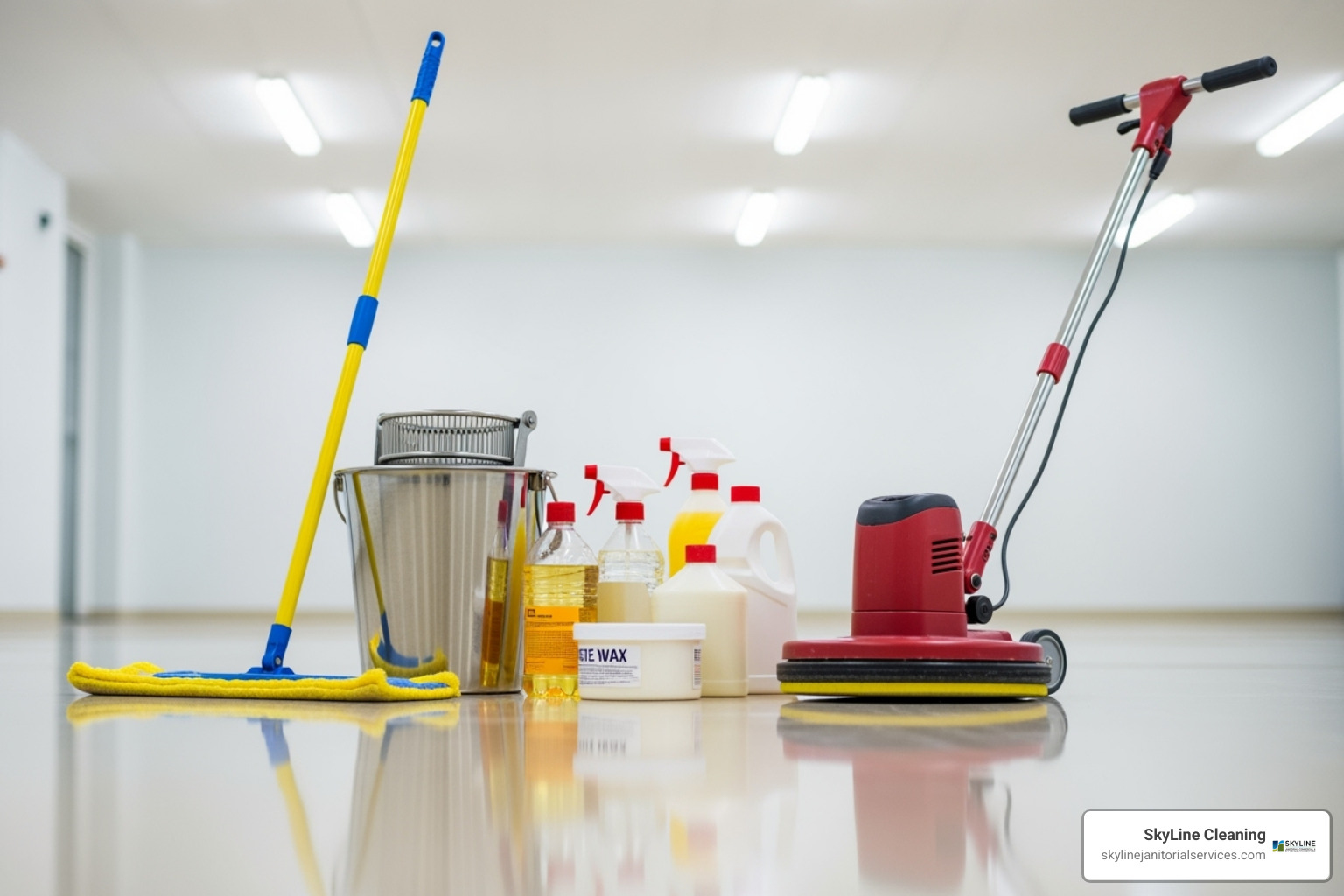
You’ll need several mops: one for stripping, one for waxing, and one for rinsing. Using the same mop for everything causes cross-contamination and will ruin the finish.
Multiple buckets are essential to prevent contamination: one for stripper, one for rinse water, and a lined one for wax.
A wet-dry vacuum is crucial for efficiently removing stripping slurry and rinse water.
For large areas, a floor buffer delivers professional results. Use different pads for each step: black for stripping, green for scrubbing, and white, red, or hog’s hair for buffing.
Smaller tools also help: a putty knife for corners, clean cloths, a squeegee, and mineral spirits to test for previous wax.
Safety gear is essential. Use rubber gloves, safety goggles, and a respirator mask to protect yourself from chemicals, splashes, and dust. Non-slip shoes and protective clothing are also crucial. At SkyLine Cleaning, we follow all proper personal protective equipment guidelines to ensure safety.
The Ultimate Guide to Professional Floor Waxing
Now for the exciting part: changing your floor from dull to dazzling. With the right approach, you can achieve professional results. Think of it as a complete makeover for your floor.
Step 1: Preparation and Stripping Old Finish
Don’t rush the prep work. This foundational step is the difference between a mediocre job and a stunning, lasting finish.
Start by removing all furniture and objects from the workspace. Trying to work around furniture leads to uneven coverage. Place “wet floor” signs for safety.
Next, thoroughly clean the floor to remove all debris. Any dirt left behind will be sealed under the new wax, creating imperfections.
Now for the stripping process. Mix commercial floor stripper according to instructions. Pro tip: use cool water. Hot water can make chemicals too aggressive and create stronger fumes.
Work in manageable 10×10 foot sections. Apply the stripper evenly with a dedicated mop, starting from the far corner and working toward an exit.
Let the stripper sit for its dwell time (usually 5-10 minutes), but don’t let it dry. While waiting, use a putty knife to scrape stubborn edges.
The removal process is next. Use a wet-dry vacuum to remove the slurry of old wax. Then, rinse the floor thoroughly with clean water at least twice to remove any chemical residue, which can prevent the new wax from bonding.
Finally, let the floor dry completely. Rushing this step will ruin the finish.
Step 2: The Art of Applying New Floor Wax
Applying floor wax properly requires technique and patience.
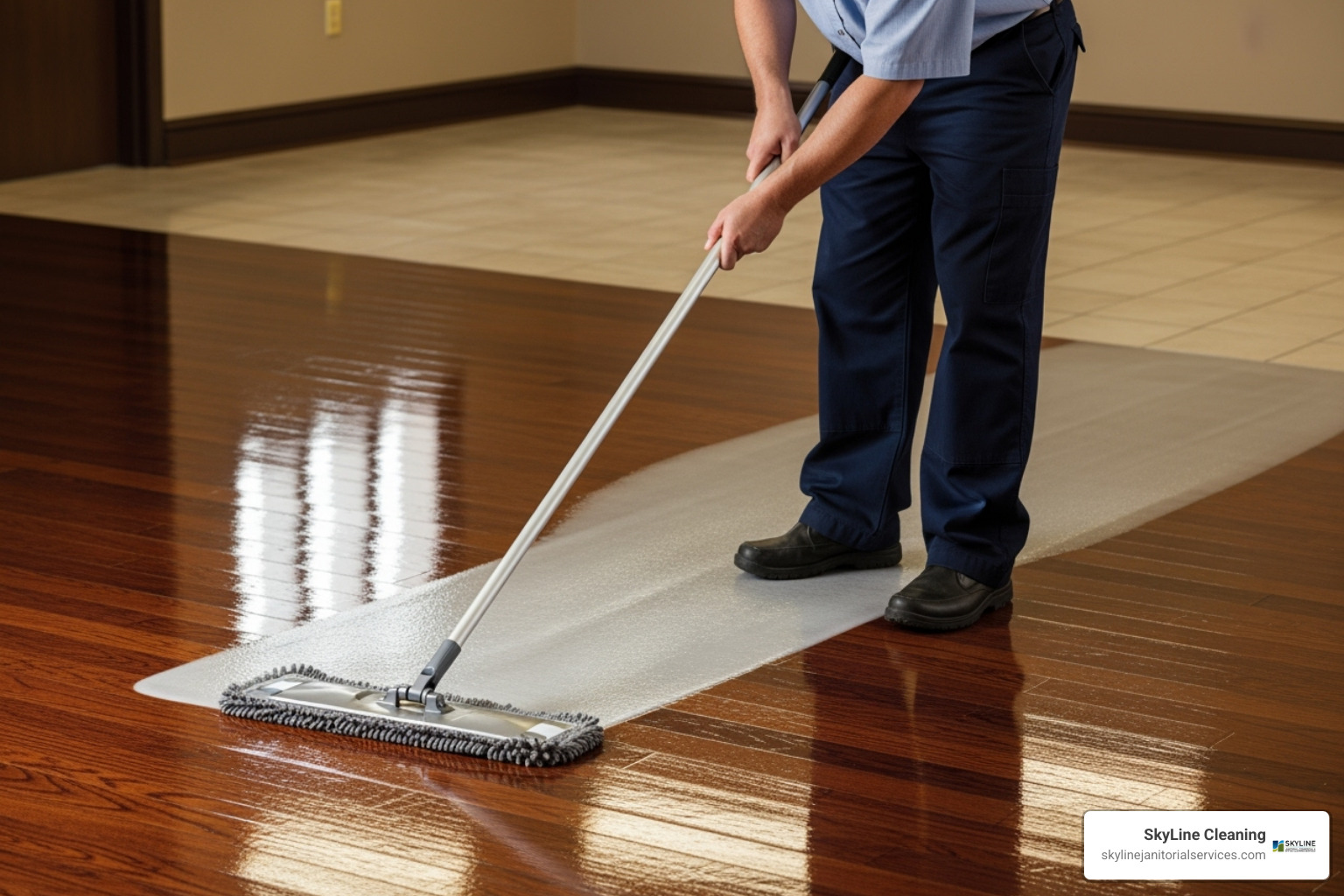
Line your bucket with a clean trash bag to prevent contamination and ease cleanup. Use a spotless, lint-free mop to apply the wax.
The secret to professional results is thin, even layers. Thinking more wax equals better protection is a common mistake. Heavy coats create a cloudy, uneven mess.
Start at the farthest corner and work toward your exit. Use a figure-eight motion with slightly overlapping passes for complete, streak-free coverage.
Drying time between coats is crucial, typically 30-45 minutes. Each coat must be completely dry before applying the next. Patience here pays off.
How many coats should you apply? It depends on traffic. Low-traffic areas need about 3 coats, medium-traffic areas 4-5 coats, and high-traffic spaces 5-6 thin coats for maximum durability.
Step 3: Buffing to a Perfect, High-Gloss Finish
The final step, buffing, transforms your hard work into a mirror-like finish.
Curing time is non-negotiable. After the final coat, stay off the floor for at least 8 hours, ideally 24-48 hours, before buffing. The wax needs to harden completely, and walking on it too soon leaves permanent marks.
When to buff depends on your desired finish. Some prefer the natural sheen of unbuffed wax, while others want a high-gloss, wet-look finish.
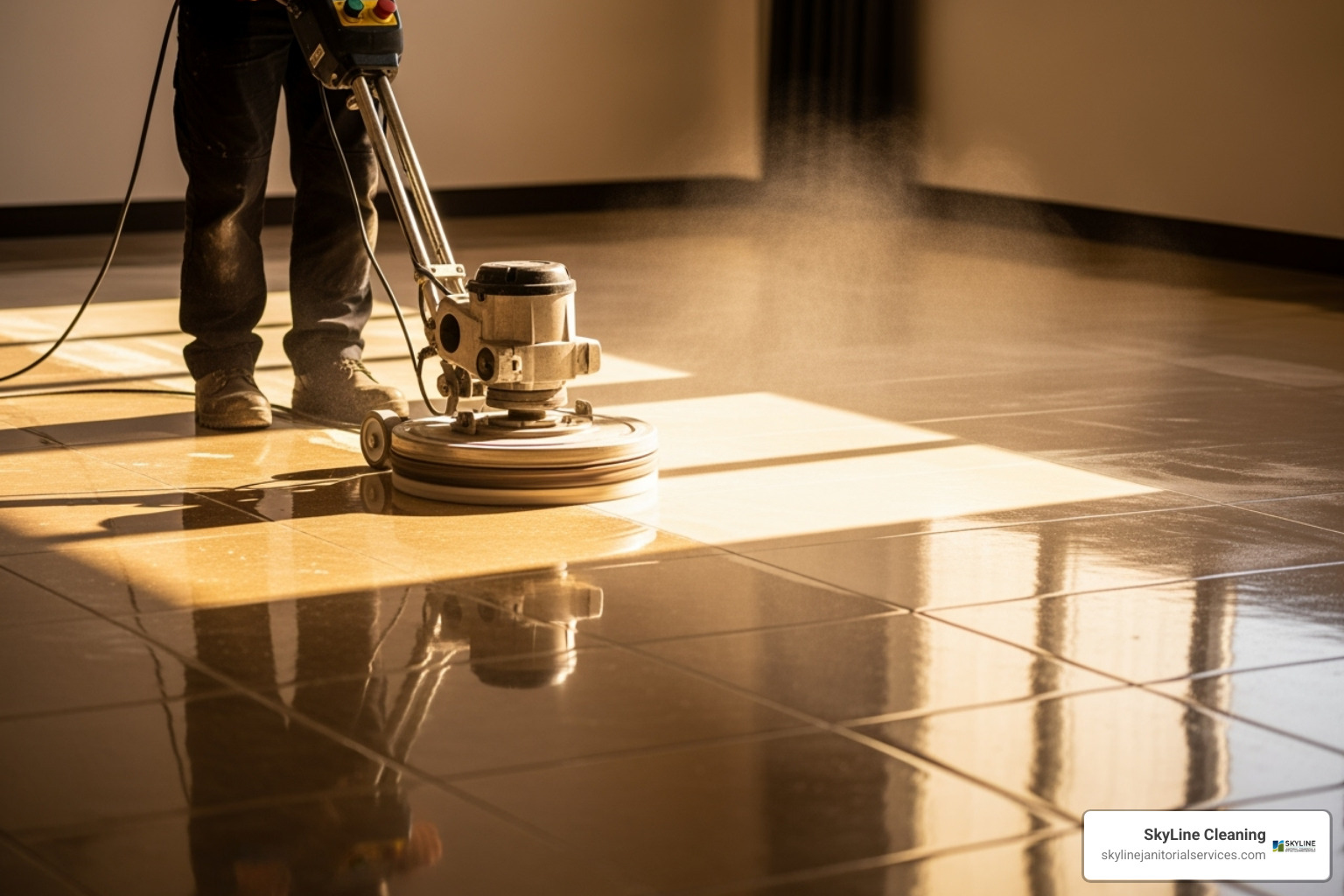
For the buffing technique, use a high-speed floor buffer with a white, red, or natural hog’s hair pad. Work in systematic, overlapping passes and let the machine do the work without pressing down.
For smaller areas, manual buffing with a terry cloth towel on a dry mop head can achieve good results with some elbow grease.
The beauty of proper floor waxing is in the details, like the light reflection and vibrant colors. Take your time and enjoy the change.
Maintaining the Gleam: Long-Term Care for Waxed Floors
Your newly waxed floors look stunning, but the shine won’t maintain itself. Regular care is needed to keep it looking sharp. The good news is that maintenance isn’t rocket science. With the right habits, you can protect your investment and keep the gleam.
Daily and Weekly Care Tips
The secret to long-lasting waxed floors is consistent, gentle care.
Daily sweeping or dust mopping is your best friend. Tiny particles of dirt and grit act like sandpaper on your wax finish. Daily sweeping prevents them from grinding into the surface.
When mopping, use neutral pH cleaners. Harsh chemicals will strip the wax. Use cleaners designed for waxed surfaces.
Pro tip: wipe up spills immediately. Moisture sitting on wax can cause clouding or penetrate the protective layer. Tackle spills the moment they happen.
Entrance mats and runners protect your floors. Use high-quality, dirt-trapping mats at every entrance to catch moisture, salt, and debris. Runners are great for high-traffic hallways.
Use furniture pads on chair and table legs to prevent scratches and scuffs. Felt pads are cheap insurance.
Signs Your Floor Needs Re-Waxing
Even with perfect maintenance, wax won’t last forever. Learn to read the signs to stay ahead.
A dull appearance, even after cleaning, is the first red flag that the wax is worn thin. Compare it to photos of the fresh wax job.
Visible scuffs and scratches that don’t buff out are another clear sign. As wax wears down, imperfections become more obvious.
Note how water behaves on your floors. It should bead up on a properly waxed surface. If it soaks in or leaves spots, the barrier is compromised.
Yellowing or discoloration can happen over time from sunlight or incompatible cleaners. It can also mean too many wax layers have built up.
How often should you re-wax? It depends on your situation. High-traffic commercial spaces might need attention every 3-6 months, while quieter areas can go 6-12 months.
At SkyLine Cleaning, we find most New York City clients benefit from professional re-waxing twice a year. The investment extends floor life and maintains a professional appearance.
Frequently Asked Questions about Floor Waxing
I’ve fielded many questions about floor waxing from business owners across New York City. Here are the most common ones.
How long does it take to strip and wax a floor?
Floor waxing isn’t a quick afternoon job. It’s a methodical process requiring patience.
Stripping takes several hours, followed by complete drying time. Each of the 3-6 wax coats needs 30-45 minutes to dry, creating significant wait times.
The curing period adds to the time. The wax needs 24-48 hours to harden before buffing. Most projects span 2-3 days from start to finish.
Planning is crucial for commercial spaces. We often schedule projects over weekends or slow periods to minimize disruption.
Can I use vinegar and water to strip floor wax?
For light buildup, vinegar can be a DIY stripper. Mix one-quarter cup of vinegar with one gallon of warm water. Adding cream of tartar can increase its power.
Always test this solution in a hidden corner first, as floor types and waxes react differently.
For heavy buildup in commercial spaces, commercial-grade strippers are more efficient and ensure complete removal.
How often should commercial floors be waxed?
Standard commercial floors typically need floor waxing twice a year.
High-traffic areas like lobbies and main hallways might need waxing 3-4 times annually as the wax wears down faster.
VCT floors generally need waxing every 6-12 months, but busy spaces may need it every 4-6 months.
The key is watching for warning signs like dullness, scuffs, and water spots. These tell you when it’s time to re-wax, regardless of the calendar.
Conclusion: The Final Polish on Your Floor Care Knowledge
In this guide, we’ve explored how floor waxing creates a protective barrier and a professional appearance. It shields floors from daily wear and makes a powerful first impression.
The DIY satisfaction of changing a dull floor is rewarding. Seeing the mirror-like finish, knowing you’ve improved aesthetics and extended the floor’s life, is deeply satisfying.
We’ve covered the science behind protection, choosing materials, and the step-by-step process: preparation, stripping, waxing, and buffing.
Successful floor waxing requires maintaining the protective barrier with proper daily care and knowing when to re-wax. Small details like entrance mats and quick spill cleanup keep your floors looking fantastic.
When to call a professional is clear for large spaces, tight deadlines, or when you want guaranteed results. Complex jobs require experience and specialized equipment.
For complex jobs or guaranteed results in commercial spaces across New York City, a professional service like SkyLine Cleaning ensures an eco-friendly and flawless finish. Our team has perfected these techniques across Queens, The Bronx, and Staten Island, delivering that professional gleam while you focus on running your business.
Ready to transform your commercial space with expert floor waxing services? Learn more about our janitorial services.