
Why Construction Site Debris Removal Matters for Every Project
Construction site debris removal is more than just hauling away waste—it’s a critical part of keeping your project on schedule, your workers safe, and your business compliant with local regulations. Whether you’re managing a small renovation in Arlington Heights or a major commercial build in Chicago, how you handle debris directly impacts your bottom line and project timeline.
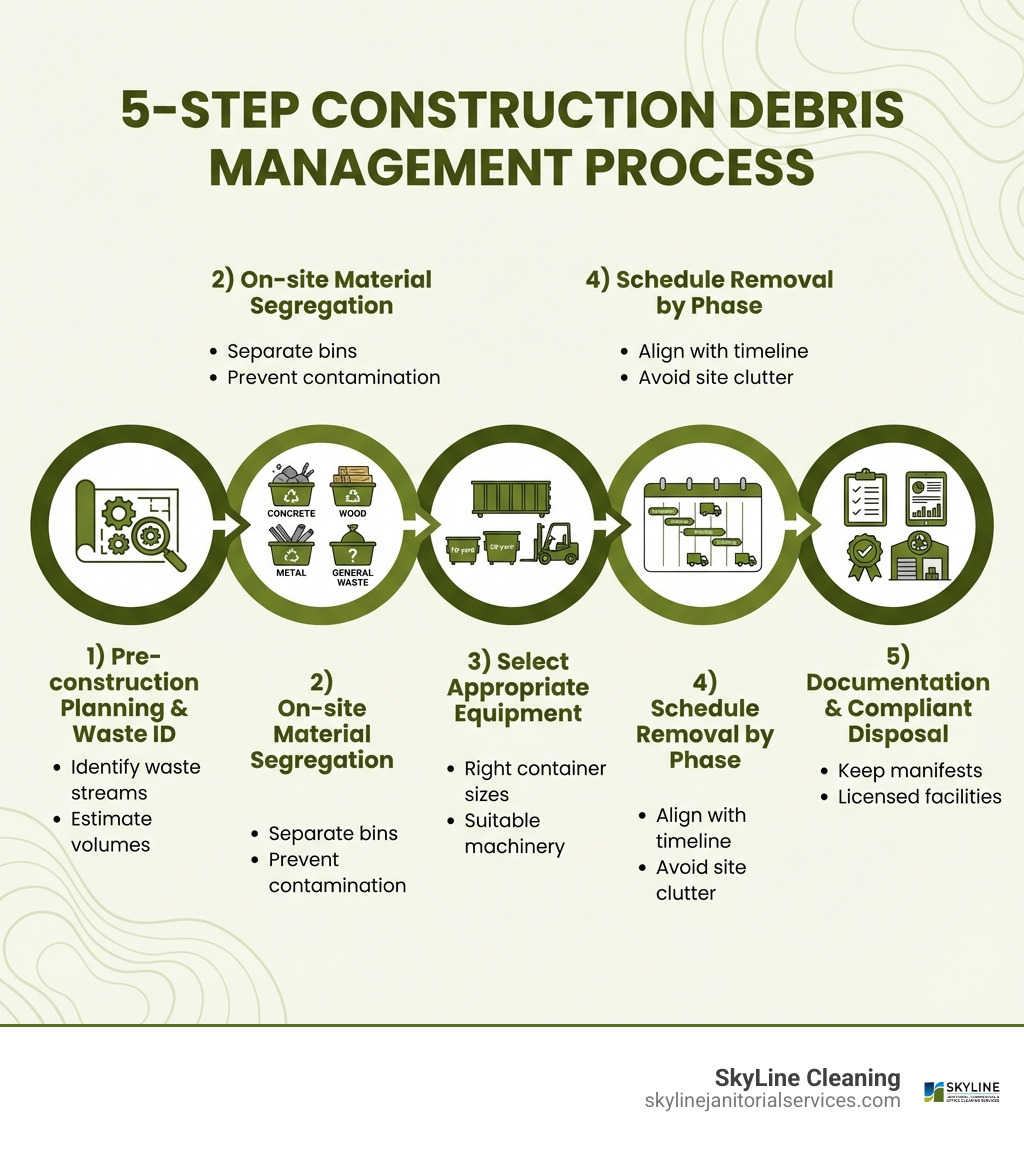
Quick Answer: Effective construction site debris removal requires:
- Planning ahead – Identify waste streams and estimate volumes before work begins
- Using proper equipment – Select the right dumpster sizes (10 to 40-yard) for your project scale
- Scheduling strategically – Align pickups with project phases to prevent site clutter
- Following regulations – Comply with Illinois EPA and local Chicago/Arlington Heights disposal laws
- Documenting everything – Keep manifests, receipts, and weight tickets for compliance proof
The numbers tell the story: the U.S. construction industry generates approximately 600 million tons of debris annually. In Illinois alone, proper debris management can mean the difference between a project that flows smoothly and one that faces delays, fines, or safety incidents.
This guide covers everything contractors and facility managers in the Chicago and Arlington Heights areas need to know—from choosing the right equipment and scheduling pickups to navigating local regulations and deciding between professional hauling versus self-removal.
I’m Anna Szczurek, founder of SkyLine Commercial Cleaning, and since 2007 I’ve worked with countless businesses across Cook County to implement effective construction site debris removal strategies that keep projects moving and worksites safe. My team has helped contractors steer everything from small office renovations to large-scale industrial builds, always prioritizing compliance, efficiency, and environmental responsibility.
The Foundation: Planning Your Debris Management Strategy
Effective construction site debris removal doesn’t start when the debris piles up; it begins long before the first shovel hits the ground. Pre-construction planning is the cornerstone of a successful waste management strategy, allowing us to identify potential waste streams and estimate the volume of debris that will need to be disposed of. Without this crucial step, projects risk unexpected costs, delays, and even safety hazards.
Imagine kicking off a major renovation in downtown Chicago without a clear plan for the old drywall, concrete, and metal. The chaos would be immense! By planning ahead, we can proactively address potential challenges, such as limited space for waste containers or specific local regulations in Arlington Heights regarding certain materials. This foresight helps us integrate debris removal seamlessly into the overall project budget and timeline, ensuring a smoother, more efficient operation from start to finish.
Identifying and Categorizing Construction Waste
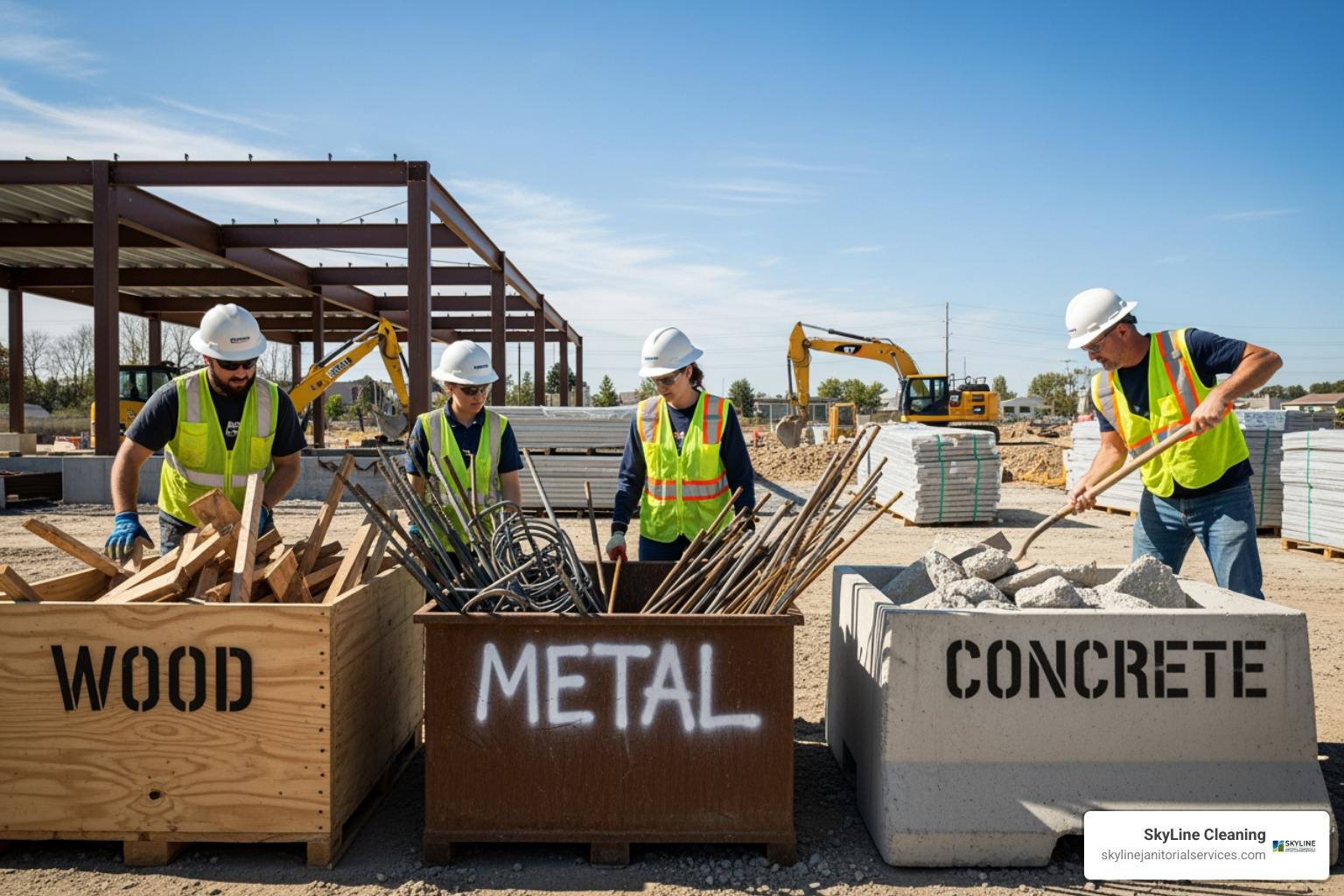
The first step in effective debris management is understanding what we’re dealing with. Construction debris isn’t a single entity; it’s a diverse mix of materials, each with its own disposal requirements. Knowing these categories allows us to sort effectively, which in turn maximizes recycling efforts and minimizes costs.
Common types of construction debris that need removal in the Chicago metro and Northwest Suburbs include:
- Concrete and Masonry: This covers everything from old foundations and sidewalks to bricks and tiles. Concrete can often be recycled and crushed for use as aggregate in new construction.
- Wood and Lumber: Untreated wood scraps, pallets, and old framing are common. Treated wood, however, may require special handling.
- Metal Scraps: Steel beams, rebar, copper piping, and aluminum siding are valuable for recycling.
- Drywall (Gypsum Board): This material can be recycled, but often needs to be kept clean and dry.
- Roofing Materials: Shingles, underlayment, and flashing. Some asphalt shingles can be recycled into new asphalt products.
- Packaging: Cardboard, plastic sheeting, and other materials used to transport new supplies to the site.
- Other materials: Glass, fiberglass, appliances, doors, toilets, sinks, office fixtures, dirt, rock, and asphalt also frequently appear.
It’s also vital to understand the distinctions between how we handle these materials:
- Recycling: This involves processing waste materials into new products. For example, concrete can be crushed and used as aggregate, or metals can be melted down and reformed. This diverts material from landfills and conserves resources. You can learn more about common construction and demolition waste types from public resources such as the U.S. Environmental Protection Agency overview.
- Salvaging: This means recovering materials for reuse in their current or slightly modified form. Think of old doors, windows, or architectural elements that can be cleaned up and repurposed in another project. This is the highest form of waste reduction.
- Disposal: This is the last resort, sending waste to a landfill or incinerator when recycling or salvaging isn’t feasible. Our goal is always to minimize this category.
The Benefits of a Solid Waste Management Plan
A well-crafted waste management plan is more than just a regulatory checklist; it’s a strategic asset for any construction project in Chicago or Arlington Heights. The benefits are numerous and impactful:
- Increased Efficiency: When debris is systematically managed, our teams spend less time navigating cluttered workspaces and more time on actual construction tasks. This streamlines operations and keeps projects on schedule.
- Cost Savings: By segregating materials for recycling and salvaging, we can often reduce disposal fees, as landfills typically charge less for sorted, recyclable materials or even offer rebates for certain commodities like metals. Avoiding fines for improper disposal also keeps budgets intact.
- Improved Safety: A clean site is a safe site. Removing debris regularly minimizes trip hazards, reduces the risk of punctures, and provides clear access for workers and emergency services. Research consistently shows that proper cleanup is essential for maintaining a safe and organized work environment.
- Environmental Compliance: Adhering to local, state, and federal environmental regulations is non-negotiable. A plan ensures we meet these requirements, avoid penalties, and contribute positively to our community’s environmental health.
- Estimating Debris Volume: A detailed plan helps us accurately predict the amount and type of waste generated, allowing us to procure the right number and size of dumpsters and schedule pickups efficiently.
Developing a detailed waste management plan is not just about compliance; it’s about setting our project up for success. For more insights into creating such a plan custom to projects in Arlington Heights, Chicago, and surrounding suburbs, you can refer to resources on developing a detailed waste management plan.
Essential Equipment and Scheduling for Efficient Construction Site Debris Removal
Once we have our plan, the next step is implementation. This involves selecting the right tools for the job and establishing a smart schedule for debris removal. Just as we wouldn’t use a screwdriver to hammer a nail, we wouldn’t use a small residential bin for a major demolition project. The right equipment and a well-thought-out schedule are critical for maintaining a clean, safe, and efficient construction site, whether we’re working on a sprawling commercial development in suburban Arlington Heights or a multi-story build in busy Chicago.
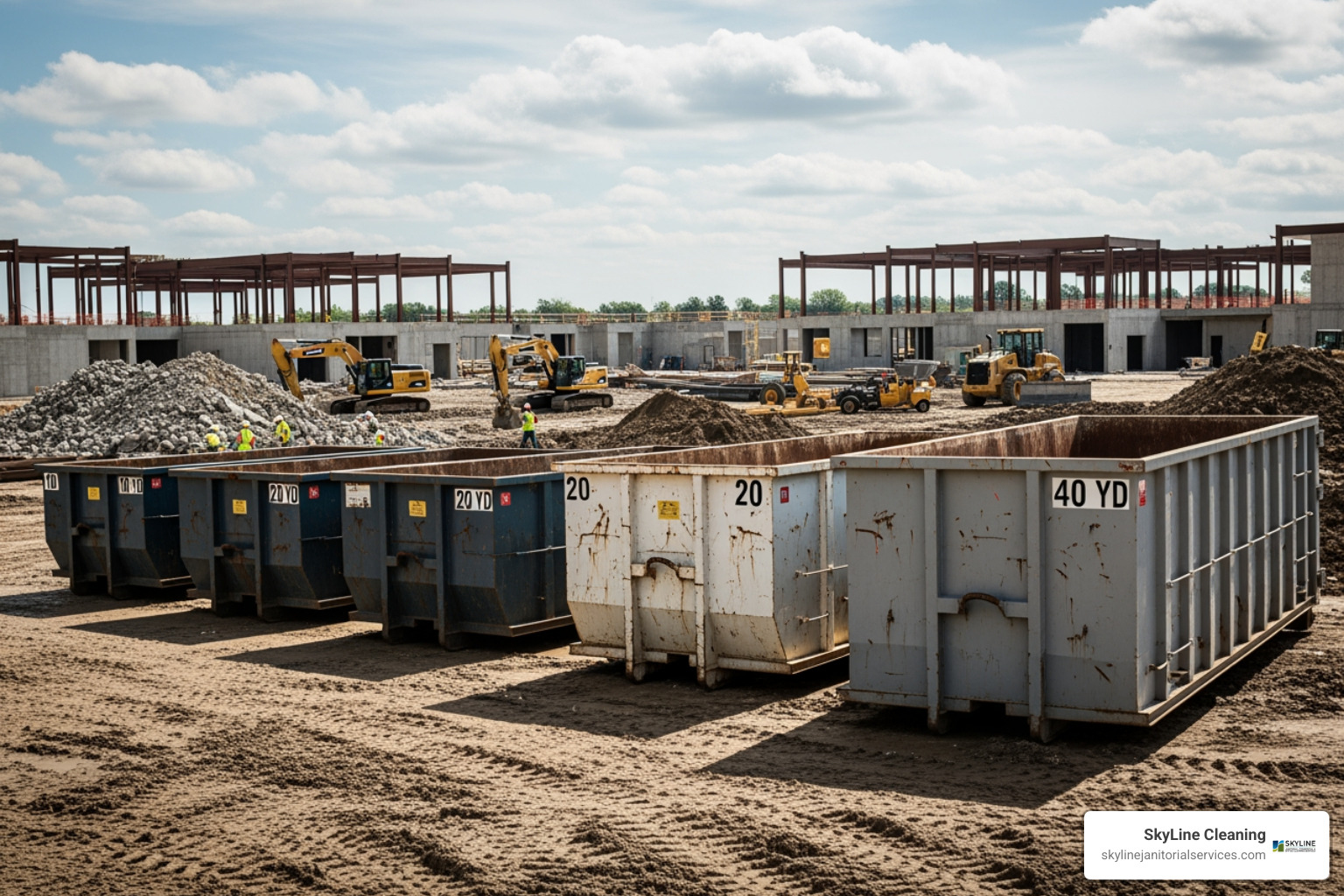
Roll-off containers and dumpsters are the workhorses of construction site debris removal. They provide the necessary capacity to handle the sheer volume of waste generated. But it’s not just about having a container; it’s about having the right container, placed strategically, and emptied precisely when needed. This directly impacts our project phases, optimizes workflow, and reinforces safety protocols by preventing excessive debris accumulation.
Choosing the Right Dumpster for Your Chicago or Arlington Heights Project
Selecting the correct dumpster size is a critical decision that impacts both cost and efficiency. Too small, and we’ll face frequent, costly pickups or overflowing waste. Too large, and we’re paying for unused space while potentially hogging valuable real estate on our job site. In the crowded urban landscape of Chicago or the more spread-out sites of Arlington Heights, managing site space is always a consideration.
Dumpsters are typically measured in cubic yards, representing the volume of material they can hold. Here’s a general guide to help us choose wisely:
| Dumpster Size | Typical Projects | Approximate Capacity (Pickup Truck Loads) | Key Considerations |
|---|---|---|---|
| 10-Yard | Small remodels, flooring tear-outs, small landscaping projects | 4-5 pickup trucks | Ideal for tight spaces, small volume. |
| 20-Yard | Roofing jobs, medium-sized renovations, deck removal | 6 pickup trucks | Versatile for various mid-sized projects. |
| 30-Yard | Extensive home renovations, typical construction jobsites, large cleanouts | 9 pickup trucks | Good for larger projects with mixed debris. |
| 40-Yard | Major construction, demolition projects, commercial cleanouts | 12 pickup trucks | Best for high-volume, heavy debris. |
Choosing the right size helps prevent overflow, which can lead to safety hazards and additional fees. It also helps us manage our site space effectively, ensuring there’s room for other equipment and safe movement for our crews. When in doubt, it’s always best to consult with our waste management partner to ensure we get the most cost-effective and appropriate solution for our specific project needs.
How Scheduling Debris Removal Impacts Your Project
The timing of debris removal is just as important as the equipment we use. A well-planned schedule for construction site debris removal can significantly impact project efficiency and safety.
- Aligning Pickups with Project Phases: We aim to coordinate debris pickups with specific project milestones. For instance, after demolition is complete, we’d schedule a major pickup. As framing progresses, regular pickups for wood scraps would be necessary. This “just-in-time” removal strategy prevents debris from accumulating.
- Preventing Site Clutter: Regular removal keeps the construction site tidy, which in turn reduces trip hazards and clears pathways. A cluttered site slows down work, increases the risk of accidents, and can be a source of frustration for our crew.
- Maintaining Clear Access Lanes: Ensuring that access roads and pathways to and from the dumpster area are always clear is paramount. This allows heavy machinery to operate safely and efficiently, and for emergency vehicles to have unobstructed access if needed.
- Remote Monitoring Technology: Some advanced waste management services now offer remote monitoring of dumpster fill levels. While this might not be common for every project in Chicago or Arlington Heights, it’s a testament to how technology can improve efficiency, allowing for pickups only when needed, optimizing routes, and saving costs.
- Improving Crew Safety and Efficiency: A predictable and timely debris removal schedule means our crew can focus on their tasks without interruption or safety concerns stemming from waste. It creates a more organized and productive work environment for everyone.
Navigating Legal and Safety Requirements in Illinois
When it comes to construction site debris removal, navigating the legal and safety landscape is non-negotiable. In Illinois, our projects are governed by a combination of state-level regulations from the Illinois Environmental Protection Agency (IEPA) and local ordinances specific to municipalities like the City of Chicago or Arlington Heights. Failing to comply can lead to significant fines, project delays, and even serious safety incidents. We must always be aware of the permits required, the rules for third-party hauling, and the proper handling of hazardous materials.
Understanding Chicago and Arlington Heights Disposal Regulations
Every construction project in Illinois operates under a strict framework of waste disposal laws. For us, this means understanding and adhering to:
- Illinois EPA (IEPA) Regulations: The IEPA sets statewide standards for solid waste management, including general construction and demolition (C&D) waste. These regulations dictate how waste is classified, transported, and disposed of to protect public health and the environment. You can review current state guidance directly from the Illinois EPA Solid Waste program.
- City of Chicago Ordinances: If our project is within Chicago city limits, we must comply with additional municipal codes. These can include specific requirements for construction waste hauling, approved transfer stations, and even mandates for recycling certain materials.
- Arlington Heights Local Requirements: Similarly, projects in Arlington Heights will have their own set of local rules, which might cover aspects like dumpster placement permits, noise ordinances for early morning pickups, or specific recycling targets.
Obtaining any necessary permits before a project starts is crucial. While we might not need a permit to dispose of debris ourselves, our chosen hauler will need to be properly licensed and registered with the appropriate authorities. Using unlicensed haulers, even inadvertently, can lead to substantial penalties under Illinois and local ordinances, with fines potentially ranging from hundreds to thousands of dollars per citation. We prioritize working with reputable, licensed partners to ensure full compliance and avoid any costly stop-work orders or fines.
Safety First: Managing Hazards During Construction Site Debris Removal
A construction site is inherently dynamic, and debris, if not managed correctly, can introduce serious hazards. Our priority is always the safety of our crew and anyone else on-site.
Common safety hazards associated with improper construction debris management include:
- Trips and Falls: Loose materials, uneven piles of debris, and cluttered pathways are prime culprits for falls, which are a leading cause of injury on construction sites.
- Exposure to Toxic Materials: Dust from drywall, lead-based paint chips, or even mold can lead to respiratory issues. Improper handling of asbestos, a highly hazardous material, requires specialized training and containment.
- Fire Risks: Piles of wood, cardboard, and other flammable materials can easily ignite, especially in conjunction with sparks from cutting or welding operations.
- Punctures and Cuts: Exposed nails, sharp metal edges, and broken glass are constant threats.
To mitigate these risks, we enforce strict protocols:
- Handling Hazardous Waste: Materials like asbestos, lead-based paint, paint thinners, adhesives, solvents, and chemically treated wood require specialized disposal procedures. These cannot be mixed with general construction debris and must be handled by certified professionals following IEPA guidelines.
- Personal Protective Equipment (PPE): Our crew members are always equipped with appropriate PPE, including hard hats, safety glasses, gloves, steel-toed boots, and, when necessary, respirators or masks to protect against dust and airborne particles.
Crucial Documentation for Compliance and Tracking
In construction, if it wasn’t documented, it didn’t happen. This holds particularly true for construction site debris removal. Maintaining meticulous records is essential for several reasons:
- Waste Manifests and Disposal Receipts: These documents are our proof of proper disposal. They detail the type and quantity of waste removed, the hauler, and the receiving facility. They are critical for demonstrating compliance to local authorities in Chicago or Arlington Heights during inspections.
- Weight Tickets: Often provided by disposal or recycling facilities, these tickets confirm the exact weight of the materials dropped off. They are vital for accurate record-keeping and can be used to track progress towards waste reduction goals.
- Tracking for LEED Certification: For projects aiming for green building certifications like LEED, detailed documentation of waste diversion (recycling and salvaging) is mandatory. These records help us demonstrate that we’ve met the rigorous standards for sustainable construction waste management, with some projects aiming for diversion rates of 95% by weight. General information on certification requirements is available from references such as the LEED rating system overview.
- Proof of Compliance for Inspections: Should an inspector from the City of Chicago Department of Buildings (DOB) or IEPA visit our site, having all our waste documentation readily available can prevent delays, fines, or further scrutiny.
We retain copies of all these documents for the lifetime of the project and beyond, ensuring we can always verify our responsible waste management practices.
Professional Hauling vs. Self-Hauling: Making the Right Choice
When it comes to construction site debris removal, one of the fundamental decisions we face is whether to handle the hauling ourselves (self-hauling) or to engage a professional debris removal service. This choice significantly impacts our project’s efficiency, legal compliance, safety, equipment access, overall cost, and even our sustainability goals and recycling rates.
While the idea of saving money by self-hauling might be tempting, especially for smaller projects, the complexities often outweigh the perceived benefits. We need to consider the true cost-benefit analysis, factoring in not just the immediate expense but also potential liabilities, time sinks, and regulatory problems specific to our areas in Chicago and Arlington Heights.
The Advantages of Hiring a Professional Debris Removal Service
For most construction projects, partnering with a professional debris removal service like SkyLine Cleaning offers a clear advantage. Here’s why we believe it’s the smarter choice:
- Time Savings: Our crew’s expertise is in building, not waste management. Professionals handle all aspects of debris removal, from providing the right containers to coordinating pickups and ensuring proper disposal. This frees up our valuable skilled labor to focus on core construction tasks, keeping the project on schedule.
- Proper Equipment: Professional services come equipped with a range of specialized vehicles and containers, from various dumpster sizes to heavy-duty hauling trucks. They have the right tools for any type and volume of debris, eliminating the need for us to rent or purchase expensive equipment.
- Regulatory Expertise: Waste disposal regulations, particularly in areas like Chicago and Arlington Heights, are complex and constantly evolving. Professional haulers are intimately familiar with local, state (IEPA), and federal requirements, ensuring that all debris is disposed of legally and compliantly. This expertise is invaluable in avoiding costly fines and legal issues.
- Reduced Liability: When we hire a licensed and insured professional, the liability for proper waste handling and disposal largely transfers to them. This protects our company from potential legal ramifications arising from improper waste management.
- Guaranteed Compliance: Professionals ensure that waste is transported to approved facilities and handled according to all environmental standards. They provide the necessary documentation (manifests, receipts) that we need to prove compliance for inspections and project close-outs.
- Focus on Sustainability: Many professional services have established relationships with recycling facilities, allowing them to maximize waste diversion rates. They can help us achieve our sustainability goals by ensuring materials like concrete, metal, and wood are recycled or salvaged whenever possible.
In contrast, self-hauling often involves significant logistical challenges, including acquiring appropriate vehicles, understanding disposal facility requirements, and dedicating valuable crew time to non-construction tasks. Without proper permits, self-hauling can even be illegal, leading to hefty fines. Choosing a professional service is an investment in efficiency, compliance, and peace of mind.
Contributing to Sustainability and Community Engagement
Our commitment to responsible construction site debris removal extends beyond mere compliance; it’s about actively contributing to sustainability and engaging with our local communities in Chicago and Arlington Heights. The construction industry has a significant environmental footprint, but we can transform this into an opportunity for positive impact.
- Achieving High Diversion Rates: We strive to achieve ambitious waste diversion rates, with some projects successfully aiming for 95% by weight. This means a vast majority of our construction and demolition waste is either recycled or salvaged, rather than sent to landfills.
- Recycling Concrete, Metal, and Wood: These are prime candidates for recycling. Concrete can be crushed and reused as aggregate; metal scraps are melted down and reformed; and untreated wood can be chipped for mulch or processed for new wood products. This not only reduces landfill burden but also conserves virgin resources.
- Donating Salvaged Materials: Beyond recycling, we look for opportunities to salvage usable materials. Old fixtures, doors, windows, and even surplus new materials can often be donated to local organizations or reuse centers in the Chicago and Arlington Heights areas. This supports community initiatives, provides affordable building materials, and gives these items a second life. For example, organizations like Habitat for Humanity ReStore accept reusable renovation materials, which is a fantastic way to give back.
- Environmental Responsibility: By prioritizing recycling, salvaging, and responsible disposal, we demonstrate our commitment to environmental stewardship. This builds our reputation as a responsible contractor and contributes to a healthier planet for everyone in Illinois.
For more information on how we integrate sustainable practices into our operations, including how our services extend to maintaining clean and efficient industrial environments, explore our More info about Industrial Cleaning services.
Frequently Asked Questions about Construction Debris Removal
We understand that construction site debris removal can seem complex, especially with varying regulations and best practices. Here are some of the most common questions we encounter, along with clear answers to guide your next project in the Chicago or Arlington Heights area.
What are the differences between recycling, salvaging, and disposing of construction waste?
Recycling involves processing materials into new products. For instance, concrete might be crushed into aggregate, or metal melted down to create new steel. Salvaging is recovering materials for reuse in their current form, or with minimal alteration, in another project or for donation—like an old door that finds a new home. Disposing means sending waste to a landfill or incinerator, which is typically our last resort for materials that cannot be recycled or salvaged. Proper planning helps maximize recycling and salvaging to reduce landfill waste.
Can I mix all types of construction debris in one dumpster in the Chicago or Arlington Heights area?
It depends on the hauler and the specific disposal facility. While some services may accept “mixed debris,” sorting materials like concrete, metal, wood, and drywall on-site is highly recommended. Not only can it often reduce disposal costs (as sorted recyclables are cheaper to process), but it’s also essential for meeting recycling goals and complying with local Illinois regulations. Many facilities prefer or even require source-separated materials to ensure effective recycling. Mixing everything can lead to higher fees or even rejection of the load.
What documentation is essential for tracking construction debris disposal?
You should always retain waste manifests, hauling receipts, and weight tickets from the disposal or recycling facility. These documents are critical for proving compliance during city inspections (e.g., from the City of Chicago Department of Buildings), for project close-out, and for applying for green building certifications like LEED. They provide a clear paper trail of where, when, and how your construction debris was handled, protecting you from potential fines and demonstrating your commitment to responsible waste management.
Conclusion
Effective construction site debris removal is much more than a logistical challenge; it’s a strategic imperative that underpins the success, safety, and sustainability of every construction project in Chicago and Arlington Heights. From the initial planning stages, where we identify waste streams and estimate volumes, to the meticulous segregation of materials for recycling and salvaging, every step is crucial. We’ve seen how choosing the right dumpster size, implementing smart scheduling, and rigorously adhering to local Illinois regulations are non-negotiable for project efficiency and compliance.
Prioritizing safety by understanding and mitigating hazards, coupled with diligent documentation, ensures that our sites remain secure and our operations transparent. The decision to partner with professional debris removal services offers unparalleled advantages in expertise, efficiency, and reduced liability, allowing our construction teams to focus on what they do best: building. Moreover, by embracing recycling, salvaging, and community engagement, we not only meet regulatory requirements but also contribute to a greener, more responsible construction industry in Illinois.
At SkyLine Cleaning, we understand the intricacies of managing construction waste. Our expertise in commercial cleaning ensures that your site is not only clear of debris but also immaculately prepared for its next phase. For a comprehensive and compliant approach to clearing your site after a project, explore our Post Construction Cleanup services. Let us handle the heavy lifting of debris removal, so you can focus on bringing your vision to life.