
Deliver Hospital-Grade Cleanliness to Renovated Medical Spaces Across Chicagoland
What It Takes to Reopen a Renovated Medical Space Safely
For post-construction cleaning in a Chicago healthcare facility, start with an infection-control plan, not a standard cleanup checklist. Keep dust contained, remove construction debris, clean surfaces from high to low, disinfect where the facility requires it, and document inspections before the space returns to patient use. The facility’s infection prevention and facilities teams should set the clearance requirements before cleaning begins.
That takes close coordination between contractors, cleaning crews, and clinical staff, especially when care continues nearby. Post construction cleaning healthcare facilities Chicago projects require this kind of coordination at every phase, and the guide below covers the standards, cleaning steps, and checks to agree on before booking a crew.
I’m Anna Szczurek, founder of SkyLine Cleaning Enterprise in 2007. My experience overseeing commercial cleaning across Cook County and Lake County informs this guide to Post Construction Cleaning Healthcare Facilities Chicago.
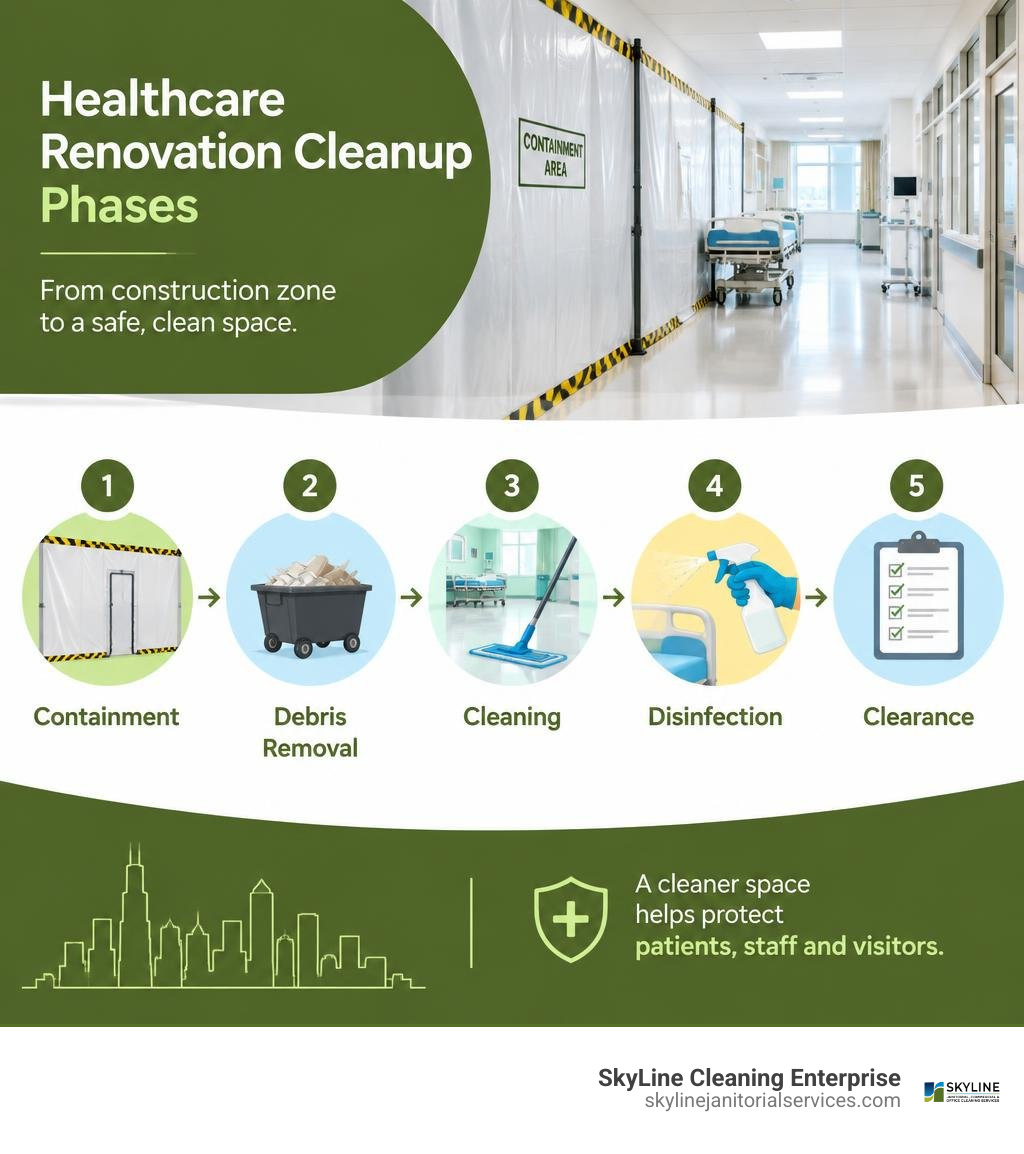
6 Crucial Standards for Post Construction Cleaning Healthcare Facilities Chicago
Post-construction cleaning in a healthcare setting is entirely different from standard commercial cleaning. In a retail store or corporate office, a stray layer of drywall dust is an aesthetic flaw. In a healthcare facility, construction dust carries fungi such as Aspergillus, crystalline silica, and fine particulate matter that can lead to severe healthcare-associated infections (HAIs) among immunocompromised patients.
When executing post-construction cleaning in medical facilities across the Chicago area, our teams adhere strictly to regulatory frameworks established by OSHA, the CDC, the Illinois Department of Public Health (IDPH), and The Joint Commission. Achieving compliance is not optional; it is the fundamental baseline for patient safety. Reviewing A Practical Guide to Compliance Standards helps facility managers align their clinical requirements with commercial janitorial execution.
The table below outlines the core differences between typical commercial renovation cleanup and healthcare terminal requirements:
| Cleaning Parameter | Standard Commercial Cleanup | Healthcare Terminal Cleanup |
|---|---|---|
| Air Quality Goal | Visual dust removal | 99.97% HEPA particle containment (down to 0.3 microns) |
| Containment Strategy | Basic drop cloths and poly sheeting | ICRA Class III/IV negative pressure containment barriers |
| Disinfection Protocol | General multi-surface detergent wipe | EPA-registered hospital-grade broad-spectrum disinfectant |
| Dwell Time Management | Minimal or manufacturer baseline | Strictly timed wet contact dwell times |
| Validation Methods | Visual walkthrough and punch list | ATP bioluminescence testing and particulate counts |
| Regulatory Oversight | Standard OSHA building standards | OSHA, CDC, IDPH, and The Joint Commission audits |
ICRA Protocols and Airborne Contaminant Containment
Infection Control Risk Assessment (ICRA) guidelines dictate the engineering controls and containment measures required during every phase of healthcare construction and cleaning. The primary objective under ICRA is containing fine particulates before they migrate into active patient wards, neonatal units, or operating rooms.
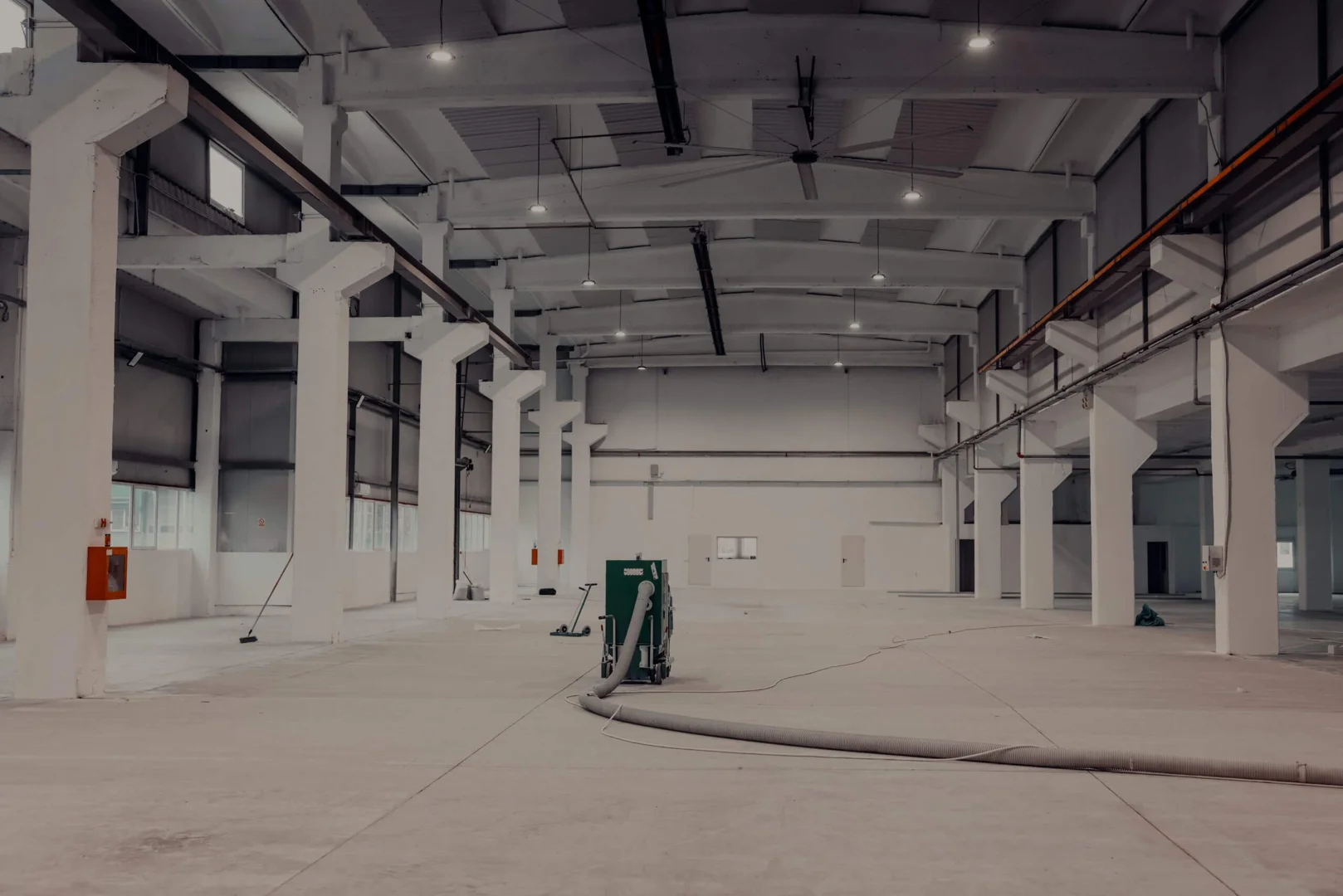
Our trained cleaning professionals use true HEPA-filtered vacuum systems to capture microscopic silica and construction dust without recirculating it back into the breathing zone. HEPA filtration units must maintain structural integrity, ensuring that all exhaust air passing through the equipment is thoroughly scrubbed. Cleaning crews must also work seamlessly around negative pressure machines (air scrubbers) and anterooms, ensuring that trash and debris are sealed in heavy-gauge bags and damp-wiped before exiting the containment zone.
High-Level Disinfection and Terminal Cleaning
Once fine drywall dust and mechanical residues are physically removed, the focus shifts to terminal cleaning and high-level disinfection. Applying a disinfectant directly over settled dust neutralizes the active chemical ingredients, rendering sanitization useless. Therefore, a thorough physical wash must always precede disinfection.
Proper application of EPA-registered hospital-grade disinfectants requires strict adherence to dwell times (the specific duration a surface must remain visibly wet to eliminate pathogens like Clostridioides difficile, MRSA, and Norovirus). When operations directors schedule commercial disinfection services, our supervisors ensure technicians apply broad-spectrum products systematically across high-touch points, surgical lights, nurse call buttons, medical gas columns, and casework.
Essential Checklist for Medical Facility Renovation Cleanup
Healthcare construction turnover requires an orderly sequence. Rushing the process or skipping stages guarantees that dust will resettle onto sanitized surfaces. At SkyLine Cleaning Enterprise, we follow a rigorous, step-by-step phased protocol.
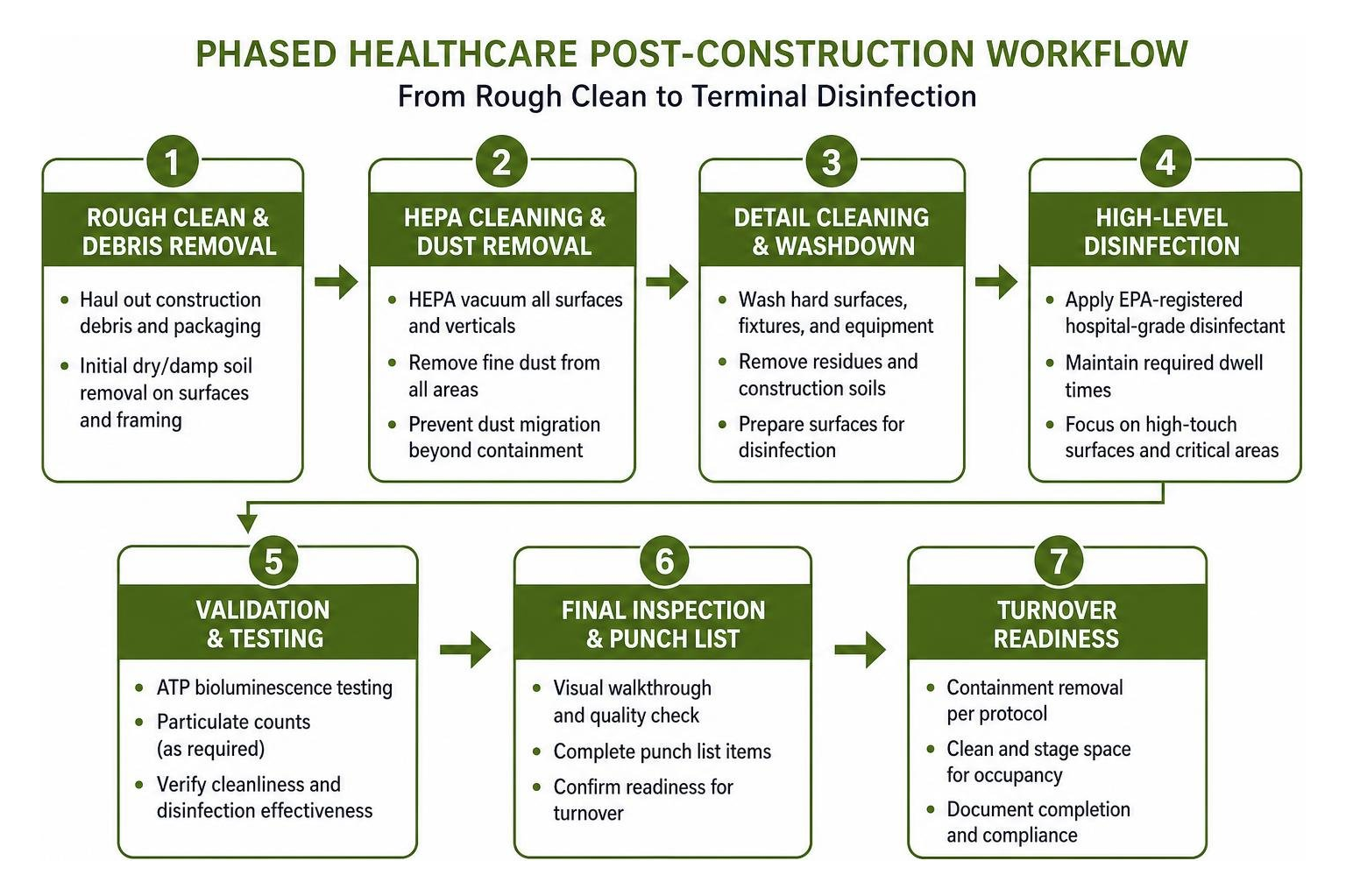
Phased Protocols for Post Construction Cleaning Healthcare Facilities Chicago Projects
Phase 1: Rough Clean and Debris Removal
- Haul out discarded construction materials, cutoffs, and packaging.
- Perform initial dry/damp soil removal on subfloors, wall frames, and ceiling tracks.
- Vacuum bulk debris using commercial-grade HEPA systems to protect mechanical returns.
Phase 2: Light Clean and Pre-Inspection Prep
- Clean interior windows, glass partitions, and frames, removing stickers, paint overspray, and adhesives.
- Detail clean HVAC supply diffusers, return grilles, and exhaust vents to eliminate trapped drywall powder.
- Damp-wipe doors, frames, light fixtures, sinks, cabinetry, and countertops using neutral detergents.
Phase 3: Final Terminal Clean and Floor Detailing
- Execute top-to-bottom terminal cleaning across all patient care rooms, scrub sinks, and clinical corridors.
- Strip and wax brand-new VCT flooring with multiple protective coats or apply specialized medical-grade floor finishes.
- Perform hot-water extraction on any newly laid commercial carpeting.
- Conduct final surface sanitization using EPA-registered disinfectants with verified wet contact dwell times.
Surface Validation and Air Clearance Testing
Before a facility director or infection preventionist can sign off on clinical occupancy, the physical environment must be validated. Visual cleanliness alone is insufficient for healthcare turnover.
Facilities teams often deploy ATP (adenosine triphosphate) bioluminescence swab testing to measure residual organic bio-burden on high-touch fixtures, sinks, and clinical counters. Concurrently, environmental health teams utilize laser particle counters to confirm that indoor airborne particulate levels match or exceed baseline medical standards. Only after passing these objective audits should containment barriers be taken down.
Navigating Complexities in Chicagoland Medical Centers
Providing post-construction cleaning across Chicago, Northbrook, Glenview, and neighboring communities requires adapting to diverse clinical layouts. A regional surgical center in Arlington Heights presents different environmental containment challenges than an outpatient medical office building in Des Plaines or an urgent care expansion in Elk Grove Village.
Whether operating in dense Cook County hospital complexes or Lake County medical office suites, cleaning providers must integrate their routines with local hospital workflows, loading dock regulations, and clinical transport restrictions.
Managing Active Patient Environments During Post Construction Cleaning Healthcare Facilities Chicago
The greatest operational challenge occurs when a renovation project directly borders an occupied patient wing. When clinics cannot shut down completely, cleaning teams must prevent noise disruptions, chemical odors, and dust tracking.
Our cleaning professionals establish clear traffic routes, utilize sticky walk-off mats at every containment exit, and operate high-performance HEPA equipment to keep dust migration at zero. By maintaining ongoing coordination with on-site facility managers, we ensure that clinical operations proceed without disruption while renovated suites are brought up to pristine standards. For medical practices transitioning into routine upkeep after turnover, our medical cleaning programs maintain long-term compliance.
Frequently Asked Questions About Healthcare Post-Construction Sanitization
How does medical post-construction cleaning differ from general commercial cleanup?
General commercial post-construction cleaning focuses primarily on cosmetic presentation—removing visual dust, cleaning glass, and polishing floors. Healthcare post-construction cleaning requires strict microbial decontamination, airborne dust suppression under ICRA guidelines, HEPA-filtered vacuuming, and terminal disinfection using EPA-registered hospital-grade chemicals.
What verification methods ensure a renovated space is safe for patient occupancy?
Safety clearance involves a combination of visual inspections, ATP bioluminescence surface swab testing, and airborne particle count monitoring. Infection prevention directors review these objective metrics alongside HVAC airflow balance reports before approving patient admission.
How do facilities coordinate cleanup timelines around patient care operations?
Cleaning schedules are typically organized in micro-phases or executed during off-peak hours to minimize patient impact. Clear communication between general contractors, hospital infection control officers, and the commercial cleaning supervisor ensures containment barriers remain sealed until final sanitization is complete.
Partner with Chicagoland’s Medical Cleaning Specialists
Achieving a clean, compliant, and patient-ready environment after a healthcare build requires a dedicated commercial partner. Founded in 2007 by Anna Szczurek, SkyLine Cleaning Enterprise is a women-owned and family-owned commercial cleaning company headquartered in Arlington Heights, IL. With nearly 20 years of experience, we proudly serve healthcare facilities, corporate offices, schools, and commercial properties throughout Cook County and Lake County within a 40-mile radius—including Buffalo Grove, Mount Prospect, Wheeling, Glenview, Barrington, Highland Park, Libertyville, Mundelein, Lake Zurich, and Lincolnshire.
Our 20 to 50+ trained cleaning professionals are fully insured with General Liability, Workers’ Compensation, and Auto Insurance. We bring our own commercial equipment and supplies to every job site, ensuring that every project meets strict quality benchmarks through regular supervisor inspections. In addition, when new clients transition to ongoing maintenance with us, we send an extra crew on the first day of service to provide a complimentary deep cleaning, establishing an uncompromising standard of hygiene from day one.
When your healthcare facility requires dependable post-construction cleanup backed by a 5-star Google rating and a focus on compliance, our team is ready to assist. Contact SkyLine Cleaning Enterprise during our office hours (Monday through Sunday, 8:00 AM to 5:00 PM) to discuss your project requirements and request an individualized quote for your facility. You can also reach us through our contact page.